
SometimesISayHistoryStuff

191646

6980

126
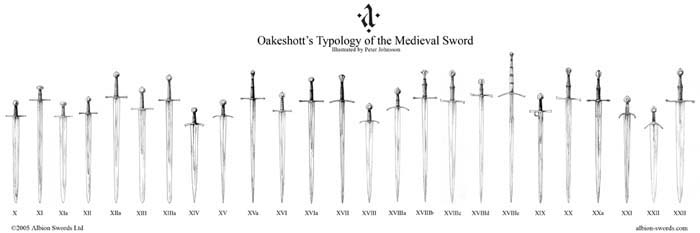
So, I saw a post a few days ago on the front page that was about medieval weapons. And overall, it was an interesting post, with cool looking profiles of axe-heads and swords. But, it had a few things that were kinda incorrect. And the comments section had a lot of interesting discussion, but also some misconceptions as well.
So, I thought it would be a fun to write a post on some of these swords. Now, I'm not infallible, and I picked this stuff up over studying, watching, and enjoying weapons that have no practical use anymore. If I make a mistake and you catch it, go ahead and yell at me. I hate spreading incorrect information.
So, that out of the way, I'm going to go through quite a few swords, hope you all enjoy.
Edit: I have been told I should probably add dates, so, if anyone is still looking at this over the next couple of days you'll see me working through the swords to give a rough estimate of when they were used.
The Ancient Greek Swords

The earliest European swords I will be talking about, because, I like them. And truth be told I don't know off the top of my head a lot of information about earlier swords. While the Greeks had several types of swords that came in or out of fashion over the hundreds of years of Hellenistic growth and prominence I will be looking mostly at the 3 most recognizable the Makhaira, the Xiphos, and the Kopis. Each of which are presented in the picture above in that order. I should note though, while the profile shape of swords are roughly accurate, the actual size of each is not technically incorrect, but misleading. I'll explain more below.

Xiphos

My favorite of the three. The double edged straight shortsword, the xiphos, far and away the most common sword shown in Greek art and uncovered by archeologists. Like most swords, the xiphos is a development from ancient daggers. It is a very interesting design, the double edged point makes it an excellent stabbing weapon. All while the slight increase in width near the top makes the xiphos also effective at cutting or hacking.
Interestingly, the xiphos varies widely in length with a handle of around 15-20 cm and a blade that ranged from 30-60 cm. However, unlike what people might expect, as the xiphos was used the general length was decreased. Now there are a few reasons for why this happened, essentially, I think the design started to emphasize what the xiphos's primary purpose was: to stab people in a very tight formation against opponent's using the aspis shield. The aspis was held relatively close to your body, so getting a smaller lighter blade through the cracks in a shield wall into the body behind it required less length and more fine thrusting control. Of course that is a bit of popular speculation.
Length: 45-80cm, 18-31.5 in
Weight: .45-.7 kg, 1-1.5 lbs
Variations used from roughly: 1200 BC - 100 BC
Aspis shield so you know what I'm talking about

Also sometimes incorrectly called a hoplon (which actually was just a generic term for an item of war). You see how the shield is strapped to the forearm? This means you can't really hold it out away from your body like you could with a shield that you grab at the center or "boss." But the aspis was also one of the very few shields made out of metal, and the only one of this size. So while you couldn't swing it very far, in theory if you could actually hit someone with it it will hurt, a lot.
Jury is still out if it was used in this way. My personal thoughts: it probably wasn't designed with this in mind, nor would that be something usually used in a tight phalanx, but if the opportunity presents itself I'm sure someone would hit someone else with the edge of one of these things eventually.

Kopis

Where the xiphos was the real main sword of the Greek armies, the kopis seems to have become the main sword in popular conscious. Some of it was because the movie 300 decided to have all the Spartans wield them, but also because look at them, they look so cool. The unique looking handle, the slight forward curve makes them look both elegant and uniquely violent.
There have been a lot of theories on how this sword got to the Greeks, some say it was a derivative of the Egyptian Khopesh, some say the Iberian Falcata, and still others say it came from the Etruscans. I won't pretend to know the right answer (though I think more scholars are starting to say it's more likely that the Falcata and the Kopis derived from the same root rather than one directly influencing the other).
In any case, these were the powerful cutters of the Greek world. With a blade length ranging from 40-65 cm. The slight curve of the blade as well as the single edge and increased mass near the tip all point to this sword being used for cutting and hacking. We get confirmation from Greek writers such as Xenophon who states that these type of swords were better for use on cavalry, where they could be swung down against an opponent, rather than in the tight confines of a phalanx.
Length: 55-80cm, 21.5-31.5 in
Weight: .5-.7 kg, 1.25-1.5 lbs

Makhaira

This sword is added for completions sake. In all honesty, the Greeks seemed to have simply used the term makhaira or kopis interchangeably. But, we modern folk have decided that if the unsharpened back of the sword curves forward we call it a kopis and if the back is straight we will call it a makhaira.
Now, why is that important? Well, in theory, if the back of the blade curves along with the front, then you can get a larger front curve without increasing the weight of the blade. However, if the back is curved it also becomes harder to thrust with. I say "in theory" because in all honesty the curve on the kopis is usually fairly small making both the positive and negative effects of the curve largely insignificant. To the point it might be fairer to just say it's a stylistic choice. That said, there are definite examples of a more prominent curve, such as the pictures I chose for the kopis above.

Gladius

The gladius, sword of Rome. Developed out of a sword from Hispania, and over its use changed along similar lines as the xiphos, becoming slightly smaller and straighter over time. However, it never got quite as small as the Greeks had their blades, and, personally I think that was because of the style of shield used by both the Romans and the Greeks. The Roman scutum shield was held with a center grip away from the body. In addition it was more oval or rectangular, giving more possible angles of attack around the shield.
In any case, the Gladius, one of the few swords that were considered to be the primary weapon of their respective army. Usually, an army would be have their primary weapon be the spear or pole-arm, but not the Romans. Sure they used pilum javelins but their main tool was this very efficient stabbing and cutting blade. And with these swords the Romans conquered the Mediterranean.
Length: 60-85 cm, 25.5-35.5 in
Weight: .7-.9 kg, 1.5-2 lbs
Variants used from roughly 400 BC - 250 AD
Spatha

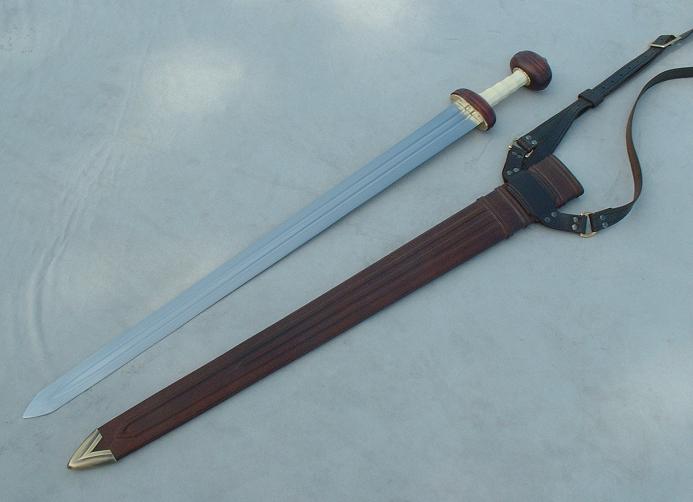
But like everything, the gladius could not last as the paramount sword for all time. By the 2nd Century we see the Romans starting to favor a different weapon. At first the Spatha was brought into the Roman army by way of the barbarian auxiliaries. Both the Celts and the Germanics favored these longer weapons, and as these auxiliaries and foederati became more and more central to the Roman military it makes sense that their weapons were in some cases adopted by the army at large.
Interestingly, despite having records stating that this weapon was from the Celts and Germans we don't know what they called it. The word Spatha is based from what the Greeks called the sword, which just means 'broad sword' and boy oh boy will I get to talk about the confusion over what the broadsword is in a little bit.
So why did the Spatha replace the Gladius? Well, honestly I don't know. Of course, being brought over by auxiliaries played a part, but it had to make the general grand transition for some reason. It seems to have first been used by Roman cavalry, which makes sense being a longer blade and all. But, what I find so strange about it, is, before the Spatha replaced the Gladius, the Gladius was getting shorter, then, suddenly it was replaced with a longer sword that otherwise doesn't have any additional benefits. It's not really a better design for thrusting or cutting, except by way of that increased length. The one main theory that does seem to correlate with the 3rd Century Crisis is a break down of Roman discipline, meaning swords that have more use on an individual level would have more advantages to one that was designed around being fought in a tight formation.
Length: 75-100 cm, 29.5-39 in
Weight: .8-1.2 kg, 1.75-2.5 lbs
Variants used roughly 50 AD - 600 AD
*It is very likely that these swords were used even earlier and just weren't as well recorded by the Romans

Viking Sword

Also called the "Viking Era" Sword or "Carolingian" Sword or the "Migration Era" Sword or as you should call it Spatha 2.0. It's not really a viking sword since it was used all across Europe. And as you should be able to see, this sword is very similar to the Spatha, and likely developed from it. A relatively long blade, when compared to the earlier shortswords. What is most interesting about these swords were, to me, the guards. The shape of the guards is one of the best methods of determining when they were made. These swords (or similar variations) were used from the 7th to the 11th century and they allow us to see this important transition in weapon crafting.
The overall pattern is that the guard would steadily become bigger and wider. This is important, as after this era we start to see the rise of the cruciform sword. Which has increased hand protection with the crossguard.
Other important things to note is the tendency in later ages to put more and more weight into the pommel, which should in theory make them easier to thrust with. However, they also seem to come to a more rounded tip, which was not the most beneficial for thrusting. So we are left with this sword that was built with a balance close to the hand (due to the heavier pommel), with a springy steel, with no guard (meaning it should be used in conjunction with a shield). So, the general ideas I've seen used to explain these discrepancies is that the sword had more of an emphasis on the cut and hack but would feel far more whippy than the usual cutting weapons of earlier eras.
In any case, this was a very popular sword and their usefulness is agreed upon by just about everyone.
Edit: So most of this post has avoided talking about metallurgy. But there is something so unique about this type of sword that my absence of discussion has in itself caused discussion. So, I'm going to give a very brief account of the Ulfberht blades.
There are a very small number of these swords that bare the inscription Ulfberht. That in itself is interesting as such inscriptions weren't very common before this period. But, even without that Ulfberhts would be special, because they were made with a higher quality of steel. To get that quality the swords would have needed to be heated to a temperature believed to be impossible in this era. As such they have been something of a mystery on how they came about. Some suggest that they were traded from the East, others that the metal comes from a meteorite or something equally mystic.
Ultimately, we don't know how it was done. But, by looking at the metal composition, the high levels of arsenic seems to imply that the metal was found and forged in modern day German territories. Which makes sense since Ulberht is a Frankish/Germanic name. But how they did it remains a mystery.
Also, it should be noted they were not made from Damascus steel (probably where the traded from the East theory came about), but a different (though similarly strong) steel called crucible steel.
Length: 70-105 cm, 29-41 in
Weight: 1-1.5 kg, 2-3.5 lbs
Variants used roughly: 600-1100 AD

Arming Sword
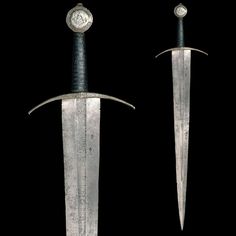
Ah, a personal favorite of mine. The arming sword is arguably the highest point in single handed doubled edged swords. Now why do I say that? Is it because the Europeans found some sort of amazing perfect design? Haha, no. There's no such thing. Anyone who says that something is the perfect sword or the best sword (looking at you katana fanboys) laugh at them. Each sword is made and used to deal with what they face on the battlefield. And the Arming Sword faced a lot, and was changed a lot to match what it had to deal with. You'll see fat Arming Swords, skinny Arming Swords, pointy-edged, round-edged, short, long, with balance close to the hilt, with balance further down the hilt. The sword was adapted to fit the situation it was in, and it was adapted quite a bit. The Europeans used the sword as knights and as common soldiers, and all of them were adaptations of the basic design we can call an arming sword.
Taking a step even further from the viking era sword, the crossguard is now fully developed. This matches with the more angled shields (both kite and heater) that were common throughout Europe. With the increased protection in armor, shields could get smaller, and with smaller shields the sword-hand would be more exposed requiring a guard. But the guard was not so large as to get in the way of being used in conjunction with that shield. So, from that we see the crossguard come into being. And that design of a straight blade with a crossguard got used by all of Europe for hundreds of years. Until the crossguard eventually became the baskethilt, but I'll get to that later.
Length: 68-110 cm, 27-43 in
Weight: .7-1.4 kg,1.5-3 lbs
Variants used roughly 1000-1700

Longsword

(Ignore those arming swords to the left side there. Or don't, they're pretty interesting swords.)
Next on the continuum of straight double edged swords. These swords became popular in the late medieval period, replacing the arming sword in some circles. Those circles usually being the wealthy. Why? Well the obvious answer is bigger sword costs more. But there is more to it than that. Why two handed melee weapons really began to dominate the field of battle in the later middle ages is a question that garners a bit of debate. Changes in metallurgical practice, wealth distribution, and similar have all been thrown in as culprits, but to me the most likely is the most obvious. Armor was becoming so strong that if you could afford the best, strongest articulated plate armor, a shield becomes unnecessary. And if you're not using a shield you have to do something with that second hand of yours.
Holding a weapon in two hands provides a lot of benefit, it allows much better control over the tip of the blade, and since you can work both hands into the swing you can make the tip move faster, thereby making the cut "stronger" for lack of a more accurate word (though there are ways for a single-handed sword to make their cuts stronger on their own, I'll get to that later). It does limit you a bit in the reach of your thrust if you try to keep both hands on the blade, but, since you can now make the blade longer you can mitigate that a little.
Much like the arming sword you see a lot of variation in the design of the longsword. Which is going to be reflected in weight and lengths. You start to see some ingenious methods of trying to maximize the efficiency of both the cut and thrust, with some swords having a relatively thicker blade for cutting, but then have an almost needle-like taper at the tip to try and thrust into the weak points in the enemies armor.
Length: 100-140 cm, 39-55 in
Weight: .9-2 kg, 2-4.5 lbs
Variants used roughly: 1200 - 1700 AD (though the rarity of finding military examples in 1200-1300 cannot be overstated)
Bastard Swords

Added because I'm sure if I didn't a bunch of people would yell at me. In truth the bastard sword is just a sub-type of longsword. Meant to be possibly used for brief periods with one hand. From what I can tell, it really is primarily designed to be a two-handed sword. Interestingly, when the next items on the list, the great swords come up, some Europeans called all longswords bastard swords. But, that's just sword names being annoying. Like always.
Length: 90-115 cm, 35-45 in
Weight: .9-1.4 kg, 2-3 lbs
Claymore

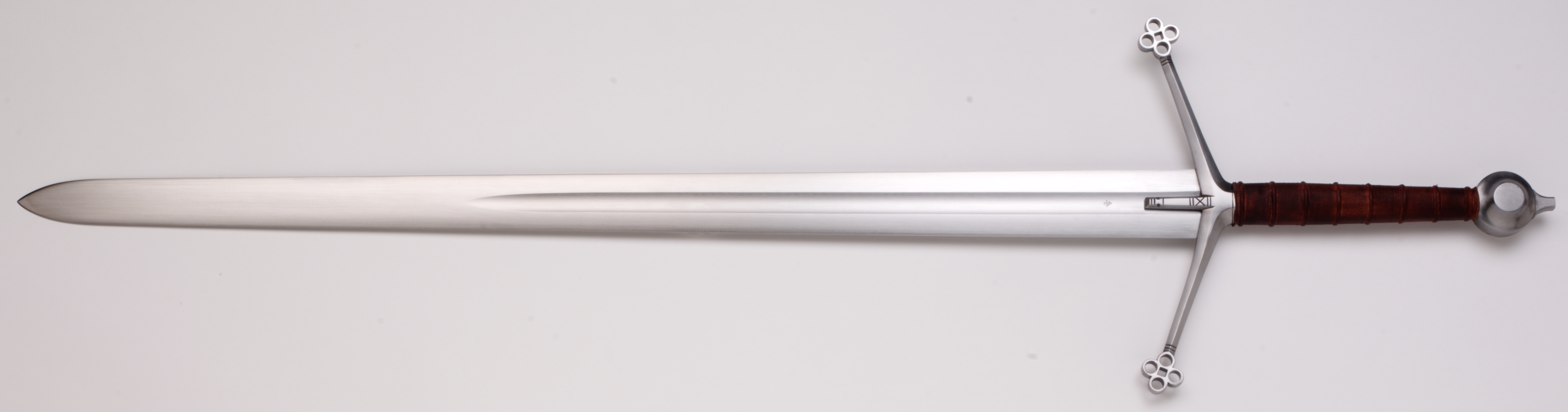
Ah the claidheamh-mór, Gaelic for "great sword" you can easily argue that this weapon is really just a sub-category from the next sword on the list the Bidenhander (double-handed) swords, also just called great swords in a few other languages.
Specifically the Scottish variant, it is somewhat well known for its distinctive V shape of the crossguard and the quatrefoil (4 circle things) design at the end of the crossguard tips. Though, not all of them had either of those things, it wasn't exactly uncommon to see a Claymore with the normal straight cruciform style or without the quatrefoil. But that look has become very distinctive. Honestly, I have absolutely no clue why their guards are shaped like that or if it provides any benefit to the weapon at all. I'm inclined to think it's simply decorative.
In any case, this was the earliest variant of the great sword, and we will see some later additions that really focus on the changes to the blade necessary to maximize the efficiency of using a weapon of this insane size.
I suppose I should add, because I am a curmudgeonly man who hates other peoples imagination. William Wallace never used one of these. They weren't invented until after he died. The famous "William Wallace Sword" on display has been proven to be a fake for years.
Length: 120-150 cm, 47-63 in
Weight: 1.8-3 kg, 4-7 lbs
Variants used roughly: 1400-1700

Zweihander/Bidenhander/Montante/Great Sword

Here we see the culmination of the two-handed grip for swords. And look at this monster, it's huge. These were swords so big they couldn't normally be sheathed. You had to carry them around resting them on your shoulder.
So, why were they so enormous? Well, it appears that these weapons were designed to run up to enemy pike lines and destroy the pikes. Now, I'd be amiss to say this is confirmed, as we have one historical source that says they weren't all that useful. But then, if we look at the battles in which they were employed against pike lines, the army that uses them seem to win more often than not.
Now, I mentioned that there were advantages of the later great swords over the claymore, and here they are. You see that part of the blade with the leather over it? That's called the ricasso, it's an unsharped part of the blade above the grip. Now it has a few uses, for one, for the vast majority of your swings you'll never use that part of the sword anyway so sharpening it is a waste. But, we see some of the later arming swords use this section to flip their finger over the guard to make a stronger grip on the weapon. This will carry over to side sword, rapier, and backsword uses (and I'll get to that later).
But, for these great swords the ricasso has an even more important focus. Simply put, it is really, really hard to control this giant weapon with the normal grip you'd hold a long sword with. Which brings up the point that it can be argued that the great sword is really a cross between a sword and a pole-arm (like a halberd, or pole-axe). It is so big, that it can't be handled like a normal sword anymore, indeed some of the maneuvers you could do with a longsword are no longer possible. So, to get the full necessary control over the weapon it became necessary to grab the weapon at the ricasso. Then clever sword makers added the leather wrapping to make that grip easier. But, that still leaves your hand exposed out in front of your blade. You definitely aren't using a shield anymore, so, as I said earlier, you'll want some form of hand protection. To answer this little problem, the sword makers added those parrying hooks at the top of the ricasso, and the full great sword was complete.
Now, interestingly, these swords weren't just used on the battlefield. We have a few fechtbuchs (instructional and advertising fight manuals) and records that some people actually used them in duels, and they seem to perform rather well. Having insane reach will give you that advantage. But, these appear to be exceptions. No one in their right mind would want to carry this garish thing around all day. It'd be like in a society where it is considered gentlemanly to carry a pistol, one nutjob wanders around the city all day with a fully loaded minigun.
Sadly, these weapons weren't really around for that long. They came about at the tail end of pike and halberd squares on the battlefield and the rise of pike and guns. And, well, it should be obvious that guns won out over swords.
Length: 160-200 cm, 63-79 in
Weight: 2-3.5 kg, 4.4-7.7 lbs
Variants used roughly: 1475 - 1550 AD. Though ceremonial swords were still around until 1700.
I should note, there are great swords that are in excess of 220 cm and weighed 8 kg or more. But there is no evidence that these swords were actually used on the battlefield, they were parade swords, specifically designed to look cool and intimidating while being carried in a procession (which parades were a surprisingly important thing in a lot of medieval cities).
Flamberge

Yep, they exist. Not so much a sword type as a style. The Flamberge could be any sword that was sharpened in the way to make it look vaguely like a flame. It seems primarily decorative. A few ideas have been tossed about that it would deflect the opponents blade in odd angles on a parry, or it would cause a worse cut, or it could be useful catching and hacking through pole weapons. Only, the two most common weapons that had this style were great swords and rapiers. And rapiers didn't have anything to do with cutting through pole-arms, nor were they designed around cutting at all. And great swords really aren't worried about deflecting various parries, they're used for charging blocks of pikemen. So, overall, I do not know what the answer is, nor do I think anyone has sufficiently tested the uses of the flamberge.
There is also some story going around that flamberge couldn't be resharpened, that it was easier just to reforge a blunted blade. And, I have found nothing about that. Nor does it make sense, great swords weren't really designed to be razor sharp in the first place. Yeah, resharpening it would be time consuming, and probably boring, but it would by definition be quicker than trying to reforge an entire sword, since you have to sharpen it then anyway. But, hey, sometimes history is weird, if you heard this rumor and you know an actual historical source that says it, please, prove me wrong. I'd like to read it.

Falchions

Alright we're going to be taking a detour away from double-edged straight swords to look at their single-edged cousins. Which, for a long time were kind of the redheaded stepchild of swords that historians failed to really focused on. The straight sword seem to have been the most popular swords in Europe, and in the Middle East for a long time, surprisingly. We seem to have this idea that these curved weapons came to Europe from the Crusades. This seems to have been a later addition to make the religious divide from the Crusades more obvious. After all the arming sword's shape is called a cruciform because of its likeness to a cross, so if the Crusaders had a weapon that looked like a cross, for the sake of narrative parallelism you'd want to give the Seljuks a similarly symbolic sword, and a curved sword looks vaguely like a Muslim crescent, so, there we go.
In fact, this type of sword seems to have developed in Europe and then spread from there (excepting of course other cultures who figured out that curved swords are beneficial without European influence, for example the Dao from China came about at around the same time and appears to have been developed independently.)
Anyway, falchions were very popular swords. Now, we have this idea that falchions were these big, heavy, cleaving swords. I've even heard that they were the half-way point between an axe and a sword. And, well, I am not going to say that there were no falchions with that heavy a design, but the vast majority were actually very light, very springy blades that were meant for cutting through things as quickly as possible.
So why is that good? Well, a lot of people have in our heads that the medieval period was filled with guys covered head to toe in amazingly impressive armor. Mail, and gauntlets, and cuirasses of solid steel. And, that was there, it was used, but the vast majority of your usual solider would be wearing gambesons, which is a layered cloth or linen armor.
Now, everyone who played D&D and know how leather armor only gives a measly +1 to AC I have something to tell you. One, leather wasn't used in armor all that much. And two, the gambeson was actually awesome. Lighter than mail (which because of the way the weight is carried can feel even heavier than plate armor) and it seems to have been very, very good at protecting people against most forms of attack. However, cloth armor can be cut into. So, of course, when these very well designed pieces of cloth armor come about we see weapons designed around maximizing their cutting potential at the expense of the benefits of having a straight double-bladed sword.
Length: 75-100 cm, 30-39 in
Weight: .9-1.2 kg, 2-2.5 lbs
Variants used roughly: 1250 - 1600 AD

Messers

Added for information's sake. Now, when I did most of my studying on swords (essentially before I went to college) Falchions and messers were always sort of less well known than arming swords. After all, geniuses such as Oakeshott had categorized all of the straight double edged swords, and the straight cruciform sword basically meant "awesome knight sword" to me, so I didn't give falchions and messers much thought. And what I had learned was basically bogus little fictions that I will not impart to you guys for the sake of not spreading misinformation.
But recently (as in, literally a week ago) I came upon a series by Shadiversity explaining these weapons (links will be provided at the bottom) that really changed my understanding. In essence, a man named James Elmslie went through the single-edged blades and categorized them. And he has shown that falchions and messers are the same blade, where the only real difference is, is how the handle is constructed. Falchions are designed with a sword style hilt where the grip is the tang that runs through the guard and into the pommel. While messers use the knife method of creating a grip with the tang being the same width as the handle itself.
Some of you may be asking, "What's a tang?" well, the tang is the very bottom of a sword, a piece of unsharpened metal that is put through the guard and is a part of the grip. This is done so the sword doesn't fall apart. So, what is the difference between a sword tang and a knife tang?
Look at the top picture of the messer, do you see the thin metal stripe down the length of the handle? That's the tang, and if you can see a piece of the tang normally when looking at the handle, then that is specifically a messer (literally German for knife) and not a falchion.
The reason why is still unknown but likely has to do with Germanic economic and guild laws. I will not be getting into them, but it is very interesting.
In any case, we see the same level of differences as we do with the falchions, with different ways the messers were shaped to try and maximize the cut, either with or two hands, and with a few tweaks over the years to try and get back some of those thrusting capabilities that were generally better on a straight sword.
Now I have shown the four images of both falchions and messers to give you guys some understanding on the level of variance we can see in the blades, some are thinner, and longer, some are rounded, some have a curve while others have a straight back. But they are all falchions and messers.
Weight and length: See falchion
Variants used roughly: 1300 - 1600 AD

Kriegsmesser/Two-handed falchion

So, after going through how useful the messers are, and how I previously mentioned that if your armor ever gets to the point you no longer need a shield, it makes sense that you would get a two-handed variant of the normal falchion style blades.
Now my understanding is that these types of blades are more commonly found using the messer style of hilt-making, so I naturally call these guys Kriegsmessers even when the bottom picture is actually a falchion. Also, I don't know of any specific name for two-handed swords using the falchion root like I do with messers.
Length: 110-140 cm, 43-55 in
Weight: 1.1-1.8 kg, 2.5-4 lbs
Variants used roughly: 1400 - 1600 AD

Cutlass

The final derivative of the falchion design. The cutlass was simply a modernized falchion with a baskethilt. Unlike most of the baskethilt swords it was still found use on the battlefield, specifically in the navy. Which makes sense, you sometimes have close quarters fighting, but no one is wearing armor and you're not going to always have a shield on hand. So you'd want something to cut through flesh, and with good hand protection. Also in a pinch it could be used as a tool to cut ropes. These tended to be a bit heavier than the thinner falchions of the same length, more like modern day machetes.
Length: 75-90 cm, 29.5-35.5 in
Weight: 1-1.2 kg, 2.2-2.6 lbs.
Variants used roughly: 1600 - 1920 AD

Sidesword

Well that's the end of the European battlefield swords. Now we're going to be looking at dueling or fencing weapons. Staring here with the sidesword. A transitional sword, it is the half-way point between an arming sword and a rapier. When compared to some imaginary "average" arming sword it will be a bit thinner, and when compared to some imaginary "average" rapier it would be a bit shorter and wider. It heavily favors the thrust, but still can be used to cut, just not as well as most arming swords at the time.
You'll notice the special guard, the beginnings of the baskethilt. It served multiple functions. First, while these sideswords can (and should) be used with a shield or buckler, the style of fighting meant the hand would be exposed quite a bit, since you generally stretch your body and arm out when you make a strong thrust, which is harder to do when trying to hold both your hands out in front of you evenly. So additional hand protection was required, even more than the crossguard because there likely wouldn't be gauntlets underneath either. Remember, this is a civilian sword, you don't walk around all day in armor, that's crazy.
But even further, you remember that bit I mentioned about the ricasso on arming swords and longswords? Well, sticking your finger over the guard does provide some additional support and control. But, it also leaves your finger exposed. So you can see that the fancy guard actually beings above the usual crossguard. Viola, additional protection for that finger of yours.
Lenght: 89-102 cm, 35-40 in
Weight: .7-.9 kg, 1.5-2.5 lbs
Variants used roughly: 1500 - 1700 AD

Broadswords and Backswords

This entry is a little different as it is looking at two different types of swords, that usually have similar or the same proportions, and get confused as to what they are a lot.
For some reason the broadsword keeps getting confused with the arming sword. I for one, as usual, blame D&D. Oh, you beautiful game, why must you make so many mistakes? One way to think of the broadsword is that it's a military rapier, or like the rapier and the arming sword had a love child. While the backsword is the mix between a rapier and a falchion. While it doesn't appear that the people in Europe during the Late Middle Ages made a distinction between these two swords, we now say that if the baskethilt sword is wider than a rapier and double-edged it's a broadsword, if it's single-edged it's a backsword.
So, you may be asking yourself. If a Broadsword is just a thicker, shorter rapier with a baskethilt, doesn't that make it a sidesword? No. It's not the same. Broadswords are broader, ok? And you may then think. Ok, so, how much wider does a sidesword have to be to be a broadsword? And the answer may surprise you: Shut up, don't think about it.
The more accurate way to look at the distinction is: is the weight and design meant to theoretically work in a battlefield, or is it always meant for civilian use. If civilian only then it's a sidesword, if it's in theory capable for military use then it's a broadsword. Does this mean that broadswords couldn't be used in civilian duels? Well, no. They often were. Does that means sideswords were never used on a battlefield? Also, no. Let's just go back to not asking questions, ok? Sword classification is weird. There are some usual tricks for determining this, broadswords tend to have the sides of the blade run parallel then have a sharp taper to a point, while sideswords are just a long thin triangle. But even there, there are exceptions.
Same goes for Backswords and Cutlasses and Sabers. I have heard some people say that cutlasses and sabers are simply a sub-category of backsword, which makes sense. But I have heard others claim that they are different since most cutlasses are curved while the renaissance backswords weren't. But that doesn't seem to be universally true of swords that were classified as backswords or cutlasses, which could mean that those who classified the swords in question made a mistake, or that the division itself is bogus.
Length: 85-100 cm, 33.5-39 in
Weight: .8-1.5 kg, 1.8-3.3 lbs
Variants used roughly: 1550 - 1920 AD

Rapier

Here we have the weapon that was entirely designed around stabbing whatever was in front of it. So, when would you use such a weapon? Well, not on the battlefield, that was for sure. It doesn't really perform all that well against the fully articulated plate armor that you would see on the battlefield, nor could it really cut through the cloth gambesons. It was a weapon that was used while you were around town.
Now, I want you to really look at the length of these things. We have it in our minds that rapiers are those diddly little things, we see flapping around in fencing tourneys trying to score measly hits that a normal person would never be stopped by. Well, stop thinking that. One, modern fencing is way tougher than you think. And two, holy crap medieval and renaissance rapiers were long. On average their blades were longer than longswords (the numbers provided are including the handles, which give the longsword a seeming boost. It should also be noted that just going by longest longswords compared to longest rapiers, the longsword still had a longer blade, but on average, yeah, rapier blades were longer). And they were not light. Those baskethilts I praised in the smallsword section? Yeah, those things add a bit of weight.
But, they feel light and easy to control in the hand. And all that weight in the hilt is part of the reason why. Ok, you guys ever see that movie Pirates of the Caribbean? There's a scene where Legolas mentions that his blade is perfectly balanced near the hilt. Well, that's good for rapiers. Because the weight is far back toward the part of the body that is making the sword move the top feels light and agile. This allows a lot of control of where the point is going. However, like everything else, there's a downside. There being less of the overall mass in the part of the blade that is actually supposed to be hurting the enemy. As we know the Force of the attack is the Mass times the Acceleration (and other stuff like cutting edge, and hardness, and ok, it's a lot more complicated but this is just an overview, back off, man). And the weight of the blade doesn't really affect the acceleration all that much. Look at the weapon weights above, go out and grab a 2 lb and a 3 lb weight and swing it around. Your swings aren't really going to be faster, especially if you train to do this a lot (yes, I know this is a really shitty science experiment that does not address all the complexities of the situation, sue me, I'm making a point). But if the mass of the blade (not the entire sword, just the blade) is a fraction of what similar swords have, then that will effect how much force can be behind the cut.
And that's why the rapier is a civilian weapon not to be used in a pitched battle in armor, even gambesons. If you're only trying to stab and cut through flesh you don't need that much force. So if for some reason you ever get asked to participate in an unarmored sword fight, grab the rapier. That's literally what it's designed for. It should also be noted, that when talking about how light the sword feels in your hand, allowing quick, flicking motions with your wrist. Your arm still feels the entire weight. And wow man, will your arms get tired swinging these things. This is not a weapon for pansies, you have to have a lot of endurance.
Frequently, these swords were used alongside a buckler shield, parrying dagger, or even a heavy piece of cloth you're trying to get your opponent's weapon entangled in. This is because again, you always want to be using both hands if at all possible. And from people wearing a rapier and a buckler at their side swaggering around town like they own the place, we get the term "swashbuckler" which is why I'm always amused when games that have a swashbuckler class focus solely on one-handed weapons with no shields. The name literally comes from the shields, guys.
Sorry got side-tracked. But the rapier, probably the quickest most efficient stabbing sword ever created, but to get that design it became a second rate cutter and terribly ineffective at dealing with almost all forms of armor.
Length: 100-115 cm, 39-45 in
Weight: .9-1.2 kg, 2-2.5 lbs
Variants used roughly: 1500 - 1920 AD

Falx

The last European sword I'm going to talk about, it's an ancient era sword that is being put in the back because it doesn't really fit into the evolution of swords like the others do. This weapon is a sickle-sword, one of two that will be on this list. And unlike the khopesh I'll talk about later, the falx was sharpened on the inside curve.
My understanding that there are both one and two-handed variants, but the two-handed version were favored by the Dacians who used these weapons when fighting against the Romans.
It appears to use this weapon, you would swing down, to used the point and edge, and then tear and scrape your target while pulling the weapon back toward you for the next swing. Essentially using it like a giant talon, that also can hook and maneuver your opponent. Which is pretty awesome. But, you can probably figure out why this design didn't become more popular with the rise of armors and longer bladed weapons.
Length: 50-70 cm, 19.5-27.5 in
Weight: .7-1.4 kg, 1.5-3 lbs
The numbers include the normal two-handed variants, but not the truly massive versions as I think those would be more of a pole-arm since all they were was a normal two-handed falx head attached to a 3-4 foot wooden pole. Also, I could not find a weight for them.
Variants used roughly: 200 BC - 100 AD*
*Probably was around a lot longer, this was the earliest reference I found, but I don't think it was described as unique or unheard of, so probably was already around a lot longer.

So a few of you keen eyed folk may have noticed that the swords I wrote about were hugely European. And here's why: they're what I know. I study Medieval Europe, I speak European languages, I have always been intrigued by European swords, and honestly "The Mysteries of the Orient" never really interested me on a level that I could not also get from just studying Europe, which has the benefit of not being required to learn a language that doesn't have a Latin Root. But, I like swords and I picked up a bit of information over my studies on non-European blades, so I will try to give these weapons as much information as I can, but probably much less than they deserve. Hopefully this post will inspire other more knowledgeable folk to fix my errors and make their own post on the wonders of non-European swords. Hell, I'm not even going to get into the New World or Russia. There has to be a bunch of interesting weapons just waiting for someone to post about.
Odachi and Nodachi

Japanese for "big sword" it is the Japanese equivalent of the greatsword (comparing the katana to the more standard longsword here). Too large to be used on horseback, or to be carried at the side, the odachi is an infantry weapon that would have been used at around the same time as the Tachi, the precursor of the katana.
Interestingly, these weapons seemed to have fallen out of use with the rise of the katana outside of ceremony. They may even have been outlawed for being too long.
Of the two, there seems to be some confusion whether or not the Odachi and Nodachi are the same sword (both just longer variants of the Tachi) or if Nodachi is the longer variant while the Odachi is the enormously longer variant. I haven't found any definitive cut-off of when you should call a blade one name as opposed to the other.
Length: 110-135 cm, 43-53 in
Weight: 3-4 kg, 6.5-8.8 kg
One note is, there doesn't seem to be an upper limit on what is considered acceptable Odachi size. While all the historical ones I have found fit into the above sizes, I've seen reproductions that go as high as 200 cm in length. I have not found any evidence for anything approaching that size used historically. If you know of one that was used (and not a show piece like the parade greatswords) tell me about it. There is one gargantuan monster of an odachi (the bastard looks 10 feet long) that is on display which looks to be ceremonial, but again, I can't read Japanese, so take what I'm saying with a large quantity of salt.
Variants used roughly: 1350 - 1600 AD as a military weapon, ceremonial versions lasted to modern day

Katana

Ah the katana. A beautiful blade, without argument. Unfortunately, this weapon has had so much said about how great it is, and a lot of it is honestly bull shit. And while I unfortunately still see that bull shit tossed about seriously, I have just as unfortunately seen a bunch of people take the exact opposite side of the argument and start claiming that the katana is a shitty sword. And that's just as wrong. It's a fine blade, it's just not a magic super blade.
So, the katana, let's dispel a few rumors. What does it do? It's designed to be a cutter. It can thrust, but not as well as some straighter blades. The edge of the sword is actually harder than the rest of the blade and is very rigid, which not only makes it efficient at cutting, it downright makes it easier to do. It is a very forgiving sword, relative to the thinner bendier falchions. And the reason for this is the process by which it was made, the folding technique makes a bunch of layers that strengthen the edge while keeping the inside a bit more malleable. This provides some benefits such as that awesome cutting edge, but also makes it less durable, relative to European blades. You see when a longsword (or at least a well-made longsword) hits something that would damage it, it will spring away, bend around, and then go back to it's starting position. Meanwhile the katana is designed to keep its shape, and when it meets an object that does not let it do that, the weapon both tries to shift and tries to stay completely still, this can causes it to completely deform and become unusable. Which is why a lot of the old martial arts instruction was about how to avoid warping your blade like that.
The other myth, katanas were super fast and light. Honestly I don't know where this comes from at all. In truth they were kind of heavy for their size. Even in fictional movies of people using katanas while attacking don't often seem that fast to me, more deliberate strikes than a flurry of blows you'd see a capable rapier duelist using. But it somehow has this myth of it being super fast. Well, to that myth, no, it doesn't even feel fast in your hand. Remember when I said above how the balance point on a sword determines how responsive it feels? Well, katanas have it pretty high up the length of the blade. Now this makes it really good for cutting, but it doesn't make it feel fast.
And that's it, it's a blade that seems designed to be a very good cutter, to the detriment of thrust, speed, and durability. But, it definitely was a very good cutter. Will they cut cannons in half? No, as I said above they are not magic. One of the best, but, maybe not the actual best cutting sword on the list.
Length: 75-90 cm, 29.5-35.5 in
Weight: 1-2 kg, 2.2-4.4 lbs
Variants used roughly: 1500 - 1900 AD*
*It developed out of the Tachi and Uchigatana which looked so similar most people just think of them all as katanas. There are differences of course, but I am not knowledgeable enough to give them all to you guys. In any case these types of swords were around since the 1200s.


Shamshir/Talwar/Scimitar/Sabre

The one-handed curved sword. Interestingly, when the Europeans went around the world setting up their empires and basically being the biggest dicks imaginable, they wrote a lot about the cultures they encountered and their weapons. And, these are the weapons they placed as better cutting swords than even the katana. Specifically the Middle Eastern and Indian varieties rather than their own sabers. Now, why would that be? Well, probably the curve. The katana has a very slight curve, meaning that when hit at the optimum point the blade will slide through the target along that curve making the cut deeper than a straight sword. But when you have these swords that had such an extreme curve as the shamshir or talwar the cut could go even deeper than that of the katana. They were very light blades, but the point of balance is very high, making them feel a bit heavier to swing. Certain examples, especially of the talwar, even have the mass of the blade right at the point of impact a bit thicker than the rest of the blade just to give that fraction of more force behind the cut.
Now of course that comes with some downsides, and as expected these things are dreadfully hard to try and thrust with. But if you want to swipe down from on horseback or simply cleave through a gambeson there is hardly a better weapon than one of these types of swords.
Plus, free hand! That means you can hold a shield, or the reins on your horse, or even a gun as was common in the Early Modern Era. That's always beneficial.
Length: 90-105 cm, 35.5-41 in
Weight: .6-1.3 kg, 1.3-2.9 lbs
Variants used roughly: 800 - modern day
The spread of the weapon seems to have started somewhere in Central Asia and spread reaching across Europe and Asia over the next 600 years.

Dao

The Dao, China's single-edged cutting sword. Often called the Chinese broadsword, despite me just saying that broadswords are double-edged. Thanks for staying consistent swords. That's really helpful.
In truth these blades are very similar to falchions. They're lighter than you'd think, but with the balance of the blade near the top, so the cut has the needed power. And like the falchion and messer the Chinese took this sword through its paces, using variations of it for hundreds of years, developing two-handed, and single-handed, and long, and short versions. Some were straight backed, some were curved.
The thinner, slightly curved version of the sword would be similar to what the Mongols used during their great expansion. I do not know if theirs is actually called a Dao sword though, but in type it would be very similar.
There was also a two-handed version called the Dadao, which seems to have still been in use during the 20th century Japanese invasion of China.
Length: 70-115 cm, 27.5-45 in
Weight: .7-2 kg, 1.5-4.5 lbs
The number above include both one and two-handed variants, simply because I couldn't find the information separated anywhere.
Variants used roughly: 1300 BC - modern day
This sword seems to have changed quite a lot during this time and seems to have periods where it was almost totally abandoned in favor of other swords only for another variant to pop up and get used again. Really a whole post could be done on the types of Chinese Dao alone. If only someone more knowledgeable than me were willing to do it.
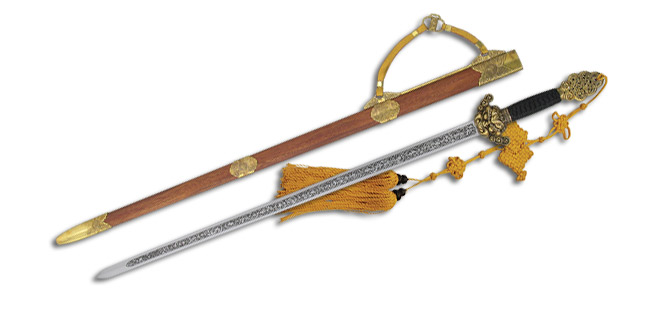
Jian

The Chinese straight sword variant. I honestly don't know much more of what to say about straight, double-edged swords. In essence, this is the Chinese version of the Spatha or Viking Era Sword, with similar length and weight. Though, it also went through the same transformations as the European straight swords over it's long use, with even some two-handed variants that never quite seemed to have gained the popularity such weapons got in Europe.
There is one thing that is fairly unique that deserves to be talked about, and that is the tassel that is sometimes attached to the back of the pommel. My understanding is that is mostly just used for distraction, or to tie around your wrist so your weapon isn't lost in the chaos of a battle. Mostly, it's just used as decoration today, still, it's interesting to see these swords move with that tassel waving around. It looks almost elegant.
Length: 50-80 cm, 19.5-31.5 in
Weight: .7-.9 kg, 1.5-2 lbs
Variants used roughly: 700 BC - modern day
First these numbers are a bit off, since there's no real cut off date of when a long double sided dagger stops being a dagger and starts being a Jian. 500 BC seems to be when the sword became full length.
In any case, same story as the Dao. There were multiple styles and variations over this swords long history. It fell out of favor and came back into favor numerous times to the point you start to wonder when we can start calling them completely different swords.

Khopesh

The Egyptian sickle-sword. One of the more unique designs of any sword. Sharpened along the outside of the curve (unlike the other "sickle-sword" the falx), the khopesh is kind of the half-way point between an axe and a sword. Far more than the falchion style blades that often get talked about in similar terms. The curve and weight near the top really adds to the mass behind the strike, much like an axe increasing the force behind the single point of impact. Now, is it better at doing that than an actual axe? Probably not. But still, such an interesting sword.
Plus, that hook is theoretically highly useful in combat, pulling away enemy weapons, and getting around shields.
Length: 40-65 cm, 15.5-25.5 in
Weight: .4-.8 kg, .9-1.75 lbs
Variants used roughly: 3000 BC - 1300 BC
End Credits

Well, that's what I know about swords.
If you want to do some research on swords yourself I have the following suggestions, that were the main sources for my learning.
Knights of the Blast Furnace by Alan Williams
Records of the Medieval Sword by R. Ewart Oakeshott
The Archaeology of Weapons by R. Ewart Oakeshott
Swords of the Viking Age by Ian Pierce
Research being done by James Elmslie: http://www.elmslie.co.uk/
Swords and Swordsmen by Mike Loades
Or if you just want to watch some videos there are folks like:
Skallagrim: https://www.youtube.com/user/SkallagrimNilsson
Shadiversity: https://www.youtube.com/channel/UCkmMACUKpQeIxN9D9ARli1Q
Scholargladiatoria: https://www.youtube.com/user/scholagladiatoria
Lindybeige: https://www.youtube.com/user/lindybeige
And for armor, Knyghterrant: https://www.youtube.com/user/neosonic66
And then there are countless forums, HEMA practitioners, fechtbuchs and more.
DerelictTwitterCrash
Swords, history, knowledge and sources, I say thanks and:
prestidigination
folding did not make the katana stronger. that was a way to process low grade ore. Laminating different carbon contents made it stronger
theIndianaJonesofRandomMode
Your ideas are intriguing to me, and I wish to subscribe to your newsletter
Lokeen
Wow man a lot of work put into this. Thank you very much I read it all and enjoyed it.
xJohnn
Well, now I like swords.
smarmageddon
Awesome post! v
v
LoneDirewolf
What about the Valyrian steel swords. There are only a handful left
SometimesISayHistoryStuff
Sadly this post only covers sword typology not the metallurgical processes in making them. I'll cover that next time. The North Remembers.
GraytheDemon
Dark souls has taught me well
aki5
PRAISE THE SUN!
circlebreaker
Skabaard
I had to make an account just to favorite this. Fantastic!
HardRockAnal
Personally I prefer the power sword, maybe the axe or if I'm in the mood: power glaive with build in bolter. Dressed in power armor ofc.
quintusfontane
The Codex Astartes supports you, brother.
EricEss
FOR THE EMPRAH!
BluePringlez
If I make a sword out of wood, which would be the prettiest to make without infinite difficulty? Im thinking sidesword
SometimesISayHistoryStuff
Prettiest is kind of debatable but I admit I've always been a fan of the xiphos's leaflike shape.
Rapiecage
I'd say the Jian. Only because I've seen wooden ones that are really gorgeous
SometimesISayHistoryStuff
But for ease of woodworking I'd avoid anything with a baskethilt guard. That has to be a pain to carve.
WelshArtist
@op no celtic swords?
SometimesISayHistoryStuff
Sorry, only can say what I know. Closest I get is the Spatha which is a development from Celtic swords.
WelshArtist
Check out 'Dros urddas Cymru' on google :)
SometimesISayHistoryStuff
Alright, will do. Thanks for given me more to learn.
craptheressomethingoutthere
@OP Is it be possible for you to add in what years the weapons were most commonly used? It'd be nice to have some more historical context.
ChuckZombie
That was my first thought as well.
SometimesISayHistoryStuff
I really should have thought of that myself. Yeah I'll try and go back and add dates. They'll be peppered in over the next couple of days.
ChuckZombie
Thanks!
INeedCats
Ooooooh thank you! I need this, gonna make some jewelry about swords some point in my life.
SometimesISayHistoryStuff
That's neat, I'm not big into jewelry myself, but I'd definitely enjoy seeing what you come up with if swords are involved.
ChuckZombie
You mean like small scale swords as pendants or charms?
INeedCats
Or some swords as rings etc
ChuckZombie
That sounds awesome You should post a gallery on here when you make them.
VEpsilon
There is such thing as a perfect sword, though. All it needs is a threaded pommel so you can end your foe rightly.
NexiKuro
By unscrewing it and throwing it in their face?
VEpsilon
Don't forget the follow up -- cutting at them while distracted.
Morrigi
Oh god, the Skallagrim memes are bleeding into imgur.
VEpsilon
I couldn't help it, it's just such an advanced tactic
Cooter961relaxitsakindofturtle
@OP reading this I could have sworn you were skallagrim
SometimesISayHistoryStuff
Heh, no. Just a fan. A fan who's very jealous of his weapon collection.
maximsk
At least you have his thanks for watching. :D
Cooter961relaxitsakindofturtle
Also a fan although I'm envy forgotten weapons stuff a bit more... I know they aren't his unfortunately
Redshift2k5
Fabulous! Can you do one about halberds, pikes, polearms?
SometimesISayHistoryStuff
I'm debating doing just that. I want to, but there are just so damn many spear variations.
astrangehop
make sure to outline some of the Makeshift polearms plz. I get tired to telling D&Ders that a war scythe had the blade parallel to the haft.
[deleted]
[deleted]
astrangehop
This guy is not the grim reaper, he's a farmer who put the biggest bit of metal he had on a stick, putting the pointy end far away.
NexiKuro
If you do include glaives and start with a picture from warcraft to get everybody riled up.
samalamalam
It isn't Dungeons & Dragons' fault arming swords and broadswords get confused: they call arming swords 'longswords'.
SometimesISayHistoryStuff
That's not exactly better. But good point regardless.
Flyndaran
I grew up on D&D but very little of their armor and weapons sections even approach reality or history.
VerifiedNoah
Claymores, I believe, had a V shaped guard to catch musket stabs, V only appears in the late 1500's it was straight before that.
mcretso
There are arming swords from much earlier that seem to have the V guard, and other swords often have slightly curved guards.
ChuckZombie
Could it be for attempts at grabbing and throwing attacking blades in another direction? Possibly to aid disarming?
mcretso
The main benefit to a guard that curves or angles forward is that it doesn't get in the way of your wrist as much as a straight one.
mcretso
Also, yes curved/angled guards do sometimes catch on enemy blades at the bind, but this isn't always a good thing.
Sheepyhead
For the katana, folding the steel was more about removing impurities and such, the varying degrees of flexibility and hardness was 1/2
Sheepyhead
actually achieved by using different types of metal for different parts of the blade. Source: book on crafting katanas I read 2/2
Sheepyhead
I can't find the name of the book, but the guy writing it had practiced the craft and learned from the Japanese
SometimesISayHistoryStuff
You see the commenting in this thread is why I avoided too much talk of metallurgy. I'll add a note about the debate though.
Sheepyhead
Yeah I should've said "bettering imperfections" instead of "removing". Oh well
svon1
you forgot the Sica https://www.battlemerchant.com/images/product_images/info_images/0180000900_sica_schwert_sword.jpg 1/?
svon1
it was only sharp on the inside blade,,,,,you put it around the neck of the enemy and then cut his head off 2/?
[deleted]
[deleted]
svon1
30€goodquality https://www.battlemerchant.com/Swords/Decoration-swords/Sica-Sword::23946.html?language=en&MODsid1=05rck36ock8ihr2hcdiuqp4ni1
Jalopenis
I am smarterer now! Thank you.
17AndDeadInside
I AM SO SMART! S-M-R-T! IMEAN S-M-A-R-T!
rocketdonkey
I have an old African sword, @OP, can you help me identify it if I send you a pic?
astrangehop
Like pre european expansion/comolization? That sounds interesting
matthdew
Send it to me! I'm a historical military illustrator might be able to identify it for you :)
rocketdonkey
Wow that sounds I'll send a picture of my penis. It's not, though.
JustinHudson
Rocket donkey doesn't make it sound much less suspicious
SometimesISayHistoryStuff
Hah. I can try but African swords are not my area of expertise.
NinjaHoff
This post is pretty edgy...
sgv1
Oooohhh
SometimesISayHistoryStuff
Yeah, but it took awhile to come to its point.
Orennic
Don't you think you're cutting it a bit short
imgurane
I agree, it takes a pretty sharp eye to make a post like this @OP
levieuxquicrisesarace
SometimesISayHistoryStuff
https://i.makeagif.com/media/5-16-2014/ReFspj.gif here, full thing
DeathByUngaBunga
Fun fact:This was supposed to be an elaborate fight scene, but Ford had explosive diarrhea because of dysentery so they improved this scene.
RyanAndTheQuestForWorldDomination
I have seen this fact so many times on the Internet I'm surprised it isn't common knowledge.
SilverSound
Yeah the guy got really pissed that he didn't get to fight.
SometimesISayHistoryStuff
I would be too. You train for weeks for that one scene in a movie and then it gets cut. Saddening.
NATA5
When you go back and watch it knowing this you can really tell.
SometimesISayHistoryStuff
Also I suppose @IPostSwords I enjoy your stuff, and hope you'll like my own little attempt to stomp on your turf.
tankmemes
Are you Skallagrim?
SometimesISayHistoryStuff
No.
NexiKuro
Why no Estocs OP? They should've at least gotten a mention somewhere between longswords and 2handers being the weird niche weapons they were
SometimesISayHistoryStuff
Short version answer? I forgot to add them before I submitted.
NexiKuro
phonedog365
Where might you put the kukri? Dagger, machete, or legit short sword?
SometimesISayHistoryStuff
I can see calling it any of the three, it is long enough to be a short sword.
astrangehop
Those might be knives? I'm nor sure where OP draws that gray line.
IPostSwords
My jimmies have been rustled.
Iwannaseeit
What about the kodachi?
SometimesISayHistoryStuff
I specifically avoid tertiary weapons like kodachi, wakizashi, rondel daggers, and the like because I'm lazy. I might do in a secondary post
Iwannaseeit
Haha okay, fair enough. Was just wondering because it's one of my favourite weapons and no one knows what it is when I first mention them
bluesman81
No leveling dex. Gimme that Zweihander, infuse it with Chaos.
ChrisAbboud
Bass cannon.
Hybris51129
DomhnallofZena
Become unstoppable...
DrKriegersClone
Step three, profit.
SweetMercifulBatman
This is brilliant. Completely unbiased and very informative. +1 my friend.
SometimesISayHistoryStuff
Thank you. I wouldn't say I'm completely unbiased. But I do try to focus on the facts.
Megatron309
Thanks for compiling this! I wanted to do research into swords, but I had no idea where to start. This made it much easier!
DickCheneytheDefilerBanned
Thank you for not over selling or underselling the katana.
killnaytor
Wow, very few cover swords and knives from thr India subcontinent and even if they do, they cover the khukri. +1 and thanks op
SometimesISayHistoryStuff
And the only one I really did was the talwar I know India has way more varied and interesting swords, I'm just not knowledgeable enough
SometimesISayHistoryStuff
to cover them all satisfactorily.
SarcasticComment
ya... well, the katana is clearly the best because anime told me so! It's folded over like a billion times!
wackywoohoopizzaman
Username checks out
SarcasticComment
@OP is too cowardly to comment. I'M CALLING YOU OUT, OP!!!!!
[deleted]
[deleted]
SarcasticComment
And spiritual demons, rocks, metal, and 3 people in a single stroke
Radix865
You forgot the spirit of the samurai and cutting steel like butter! ...But they don't have pommels so you can't end your opponents rightly.
isaydefy
Totally did not expect a end him rightly joke on Imgur. The Internet is a small place
MostIndeedlySo
Never forget that a 3 feet long blade can easily slice through 10 or 15 (or 50) feet thick object slicing it clean in two.
SarcasticComment
it works best when you focus the spirit of the warrior through the blade
MostIndeedlySo
Even better if the object happens to be a giant robot.
cwispy
Does anyone know a fps/tps medieval warfare sim that requires not to many power?
SometimesISayHistoryStuff
Mount and Blade.
LemonG34R
BUTTERLORD IS COMING OUT SOON OP. SOON. (What's your fav faction btw?)
SometimesISayHistoryStuff
Oh man, it's been so long. But Nords and Rhodok were always my people.
LemonG34R
Rhodok for life here, at least we can agree that those fat horse-torturers should be razed to the ground.
LordCastellanCreedtheSupremeCommanderofCadia
LemonG34R
>fat king, >Rhodok castle... what... At least Jeremus is there to keep things in order
cwispy
doesn't work on windows 10 unfortunately
BoredBird
Nonsense. Works just fine.
cwispy
in the task manager it says it's running, but there is no way to graphical feedback of the program.
CaptainMcFloaty
They've got curved swords. Curved. Swords.
FluffyWoofles
Beat me to it! +2-1
Shadonk
They have curved Penises.
DasDoge
I don't know why you are being down voted.
Shadonk
It's alright, I'm sure I made somebody laugh!
DasDoge
Btw for people who don't get it he/she is reffering to the skyrim poop series.
RyanAndTheQuestForWorldDomination
Curved. Penises.
owlest
fuck all that singing and shit