
MisterLemons

1614

54

3

The United States of America is kinda renowned for its military industrial might. Usually they're a bit ahead of the curve in almost all fields and rarely had to play catchup with another nation when it came to machines of war. This wasn't always the case, though, which was the entire premise of the cold war. We're here to talk about that, but more specifically, an arc where the USA designed a vehicle out of fear rather than out of necessity.
We're here today to talk about the F-15.

The story of the Eagle starts in the war in Vietnam, like so many other pieces of hardware. In the budding realm of first generation jet propulsion fighter aircraft, the Soviets has fielded the MiG-15 in the theater of Vietnam and the Americans had countered with the F-86. Two remarkably similar aircraft with remarkably similar parameters. Both of these aircraft were what's known as "First Generation" jet fighters, meaning that they were essentially identical to the principles of the old propeller driven aircraft. They were both analog stick fighters but with jet engines powering them. What's the saying, "if you're fighting fair, you're fighting wrong"? Both superpowers were scrambling to outdo the other. The soviets rolled off the assembly lines first with the MiG-21.
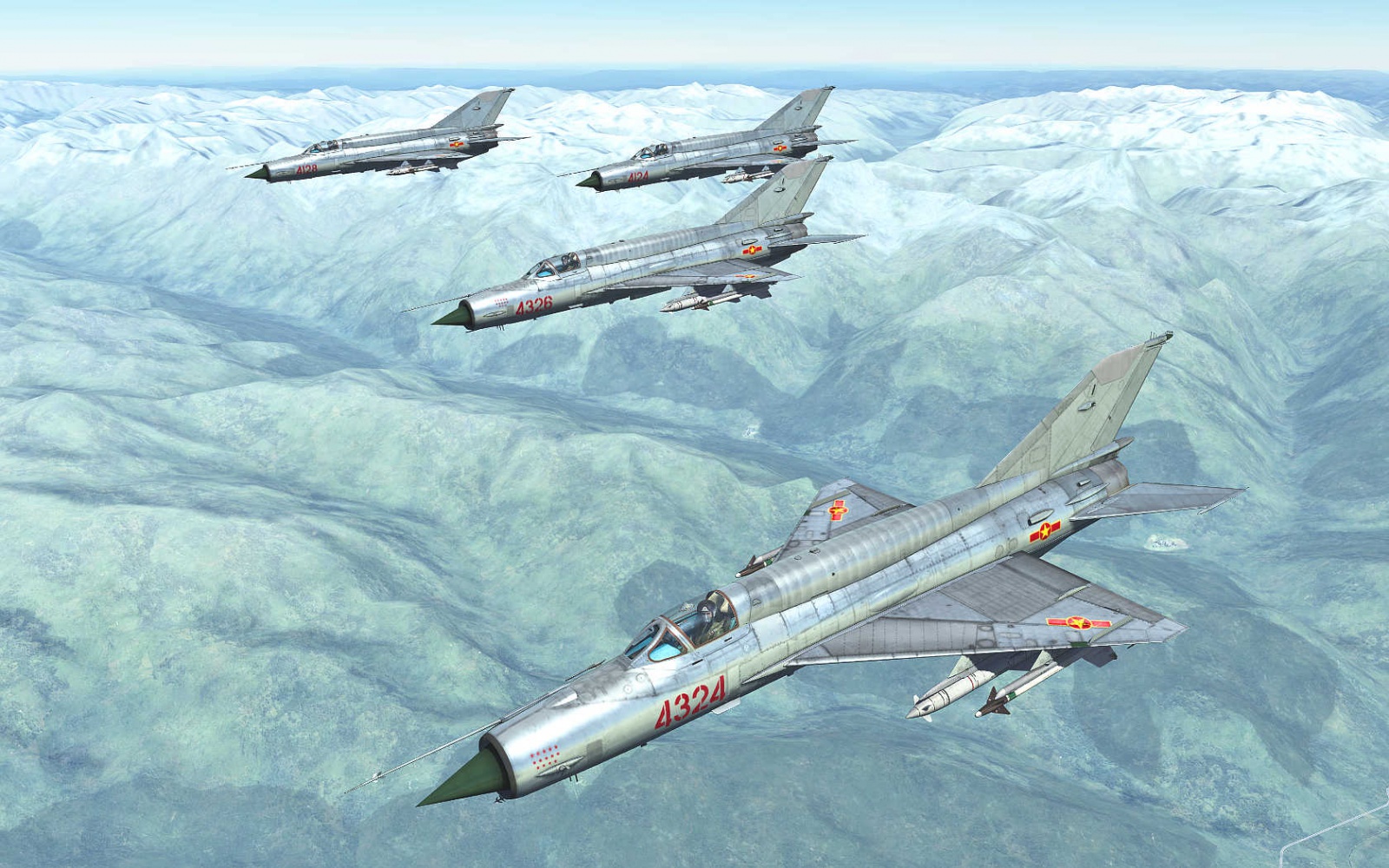
The MiG-21 was a 2nd generation, small, narrow, agile, and fast fighter aircraft with a few new niches that the previous generation lacked. Most notably, these aircraft strayed from the olden ways of propeller driven aircraft where the pilot looked out a canopy, saw a plane, went to investigate, and gunned it down if they didn't like what they saw. This new generation of aircraft dipped into the realm of computerized flight control and other electronic systems. They fielded RADAR dishes and were suited for almost exclusively interception of other aircraft. These new dishes were tied to the now computerized avionics and were mostly use for locating and rangefinding targets so now the aircraft could accurately display where to point the nose prior to pulling the trigger for the cannon. More importantly, these planes and their new fangled active tracking RADAR dishes were tied into these fancy shamncy things called "missiles" which were also kinda new to the world of aircraft at the time. Meanwhile, on the American side of things, a small plethora of 2nd gen fighters such as the F-100 and F104 and even the A-7 were being deployed in a scramble to see if they could out perform the MiG, but with little success. Then, in a stroke of genius, someone shouted "I have an idea..."
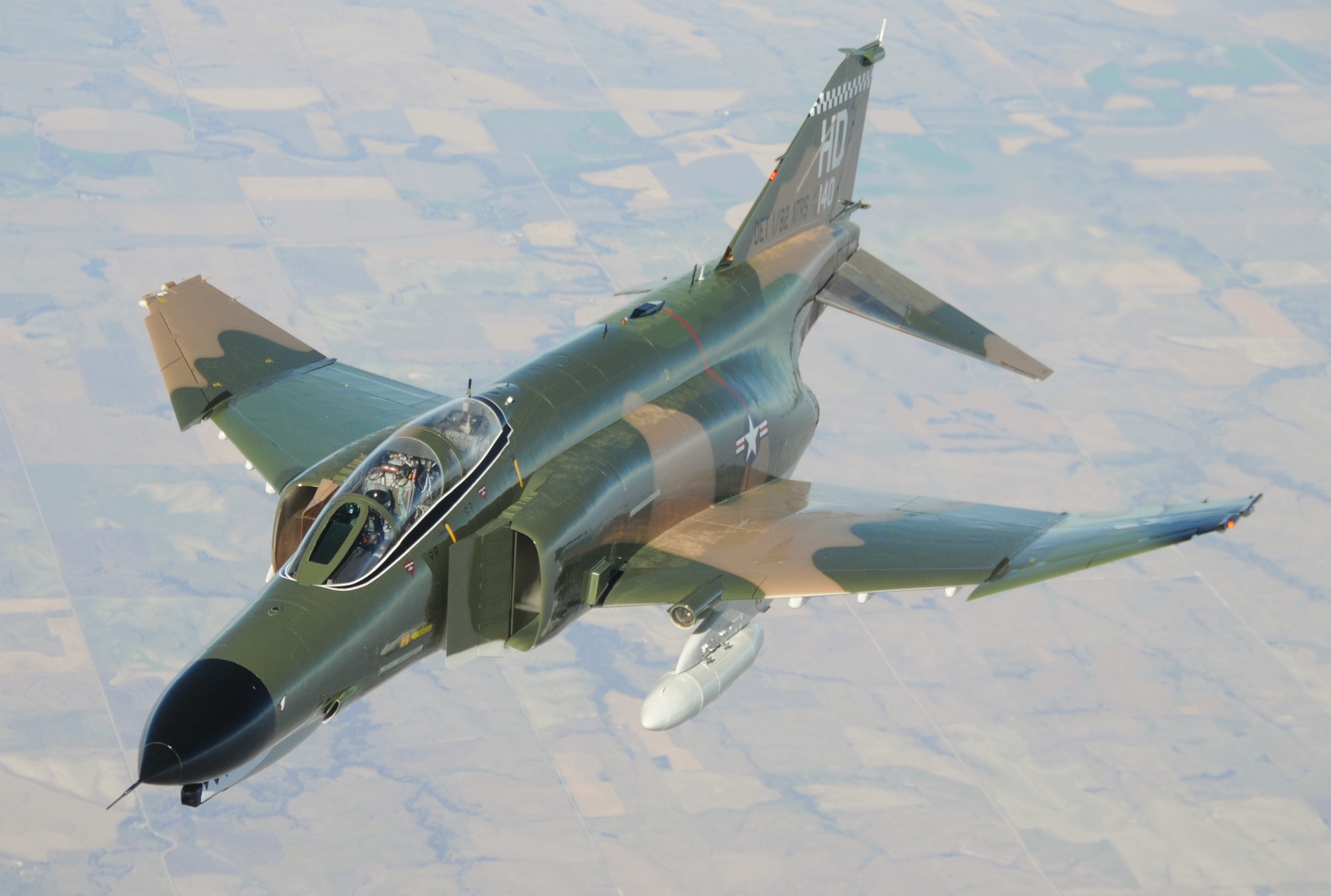
"... What if we take our interceptor, and use it as a fighter!?" Brilliant! Let's field our extremely large, extremely fast, extremely heavy, gunless, hulking missile truck of an interceptor as an air to air fighter. You see, the F-4 'phantom' was not a fighter jet, the F-4 was a 3rd generation "interceptor". In the new age of missiles, while the world was learning just how obsolete large fleets of bombers were, the U.S. just kinda figured they needed something VERY fast with a huge RADAR dish and could lob these new self-propelled high explosive high-five machines at these easily detected, easily tracked, defenseless lumbering bombers because that's all you could ever reasonably expect this thing to do, right? Not quite. Experience is the best teacher, and the war in Vietnam lead to a lot of experiences.

You see, the MiG-21 was a fighter jet. It was designed to combat other fighter jets. The F-4 was an interceptor; it was designed to go places and say 'hi' to things that didn't expect it to be there. The MiG was not quite as fast as an F-4, but it was more than fast enough and more importantly, it was more agile and had some history in it unlike the F-4 which had visions of the future tucked away instead. The MiG had a good old fashioned cannon in the front for when things got dicey. Both aircraft could use these new missiles, but only the MiG had a secondary weapon because unlike the Phantom, it was designed with dogfighting in mind.

Things didn't go so well. RADAR was still fairly new, having a range of only a few miles realistically, and missiles were even newer. They were unreliable because they really were designed to hit massive lumbering bombers moving in a straight line in the upper atmospheres thin air. A small fighter that was pulling turns was a shot in the dark, one that yielded roughly a 15% success rate with the F-4s AIM-7 sparrow missile. To make matters worse for the phantom, airspace over Vietnam looked like glitter to these new RADAR dishes and Identify Friend or Foe (IFF) wasn't quite a thing yet so the fighters still needed to get in close to identify a target before deciding if they didn't like it. The phantom was a bit of a smoke machine while in the air which allowed it to be identified quite easily so that was no good. The results were concerning. Air superiority for the U.S. was a pipe dream.

MEANWHILE, back in the realm of "the old ways will persist", a new bird was taking shape. Some of you may recognize this as 'the coolest effing plane to ever exist'. This post is here to prove you wrong but you're not too far off being honest. This here is the XB-70 Valkyrie (cool and fitting name), Americas stubbornness in supersonic form. While the Soviets were developing Inter-Continental Ballistic Missiles (ICBMs) to deliver their nuclear weapons and other such hardware, America had such thoughts as 'hey, why don't we just make a bomber go REALLY high and REALLY fast instead?' and 'what if the SR-71 was a nuclear bomber?'. The Valkyrie was quite fast, capable of operating at roughly the same altitude and same speed as the blackbird; over mach 3 at 70,000+ feet, unheard of for a bomber. The soviets, not knowing supersonic bombers were not the way of the future at that time, didn't like this one bit.

Here's where things get spicy and the story starts to come together. You're looking at one of the few times America was genuinely frightened by something the Soviets designed and produced. This here is the MiG-25 Foxbat, a third generation interceptor (but the US didn't know that at the time, and suspected a 4th generation multirole fighter). The Soviets were quite proud of this thing. It was *everything* they had to offer and they flaunted it like a school child shows an A+ to the rest of the class. Now the soviets were just as secretive and full of themselves back then as Russia is now so you can imagine what they did with the thing. It was a flying, screaming, rattling propaganda machine, the culmination of everything they learned watching the air battles over Vietnam and learning a few things even from the F-4
All America had to operate with was the pictures and what the Soviets posted publicly. It was HUGE, so it had to be well armed. The wings were MASSIVE so it had to be agile. The engines, a whopping 4 feet in diameter at the ass end, meant it to had to be wicked fast. Twin tails? MENNACING! This thing had the whole world whispering 'oh, shit'.

At the time, America had something called the F-X program going on. Everything they themselves were learning from the war was put on a whiteboard along with legitimate mathematical equations to figure out like fancy snobs sitting around a table and sipping vintage wine what the perfect fighter would look like and they set some requirements for such. This, all of it, was scrapped at the mere sight of the Foxbat. Even the hypothetical plans were obsolete. That's the kind of fear the western world experienced when the Soviets started playing with the Foxbat. Record after record, the point was hammered home. The MiG showed up at a few airshows but what really set the alarms blaring was when Israeli RADAR stations picked up several 'small' aircraft moving at mach 3.2 at 65,000ft. It was the new MiGs undergoing trials.
"OH, SHIT!"
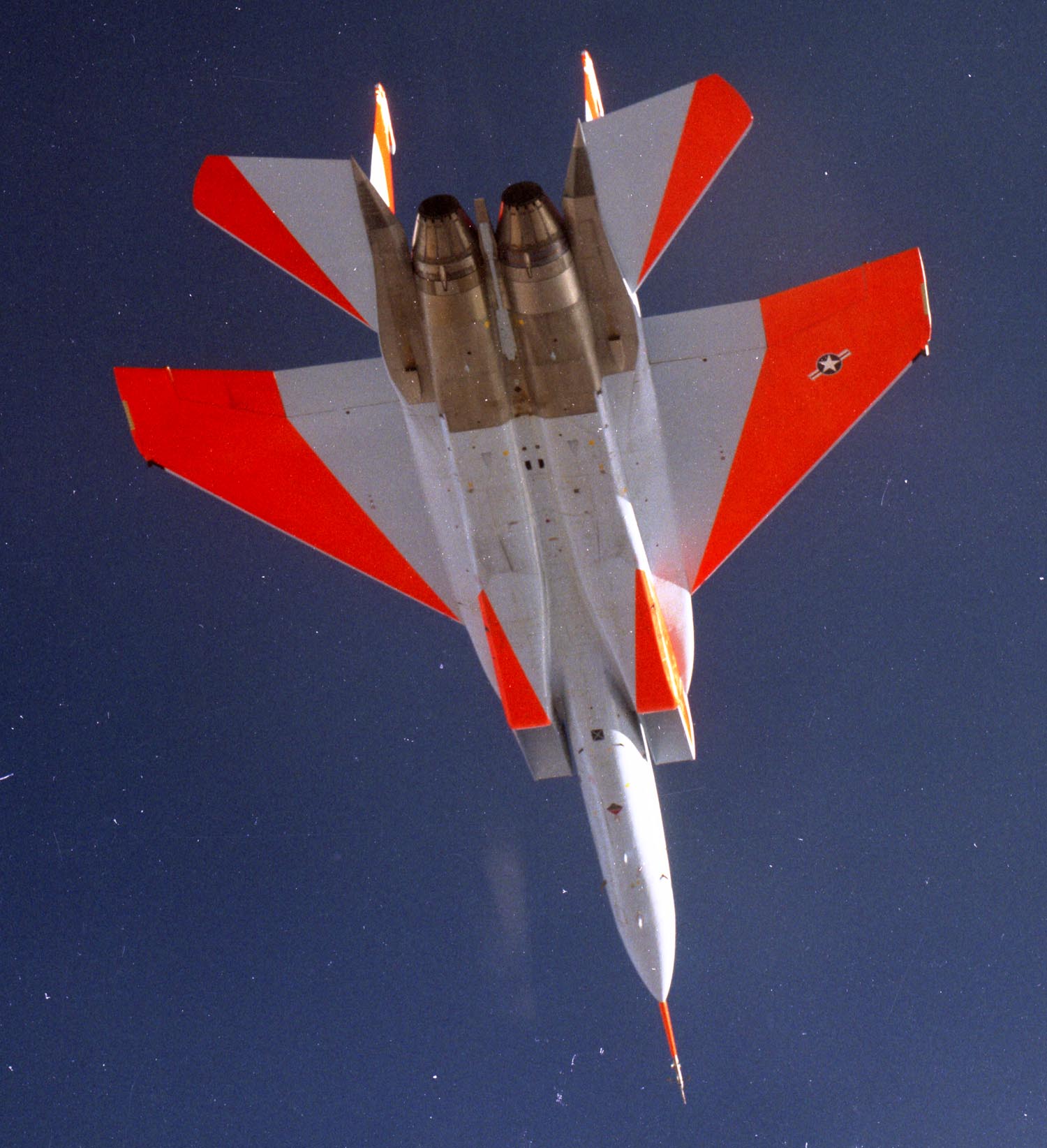
The response (which was technically already under way by this time), not long after scrapping the F-X program and putting out a bid, the likes of which Boeing, Grumman, NorthAmerican Rockwell, Vought, General Dynamics, Fairchild Republic, and McDonald Douglas submitted designs for what was now known as the "Air Superiority Fighter" class. ASFs were thoroughbred fighters designed to excel at swatting everything from the sky, unrivaled without question. Ending the contract, McDD won and was awarded practically a blank check, told to make GREAT haste, and within 3 years in the ripe old year of 1972 (keep this in mind) produced the first flightworthy prototype, quite staggeringly fast considering what the plane was to become. While the F-14 Tomcat was already fielded, it was simply not the ace-in-the-hole the US was lookin for. It was a 4th generation fighter, but it was more tailored to the Navy than anything else. The tomcat was a great aircraft, it even had some great hardware designed specifically for it, but it was just not enough.
The XF-15, also 4th generation fighter, was an air superiority fighter. It was pushed into trials and began drawing attention of its own. She too was big, had huge wings, huge engines, and bubble canopy for excellent vision, a massive nose for a large RADAR, and began setting records.
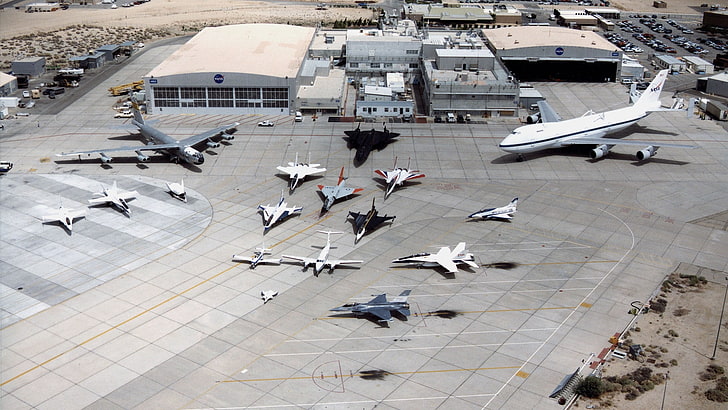
Just for scale note the size of the tarmac square tiles on the ground. The far left is the B-52. The far right is a Boeing 747, one of the largest passenger airliners to this day. The big black one in the center rear is the Blackbird. The grey one at the bottom is an F-16, probably about two of those ground tiles in length. The F-18 above it isn't much larger. Just off to the right of the B-52 is a utility pickup truck, likely an old Silverado 2500 or 3500. Notice those two hulking white planes with the twin tails on either side of the blackbird; those are F-15s, they are *huge*.
On a side note, that one off to the right painted in red white and blue, we'll talk about that later.
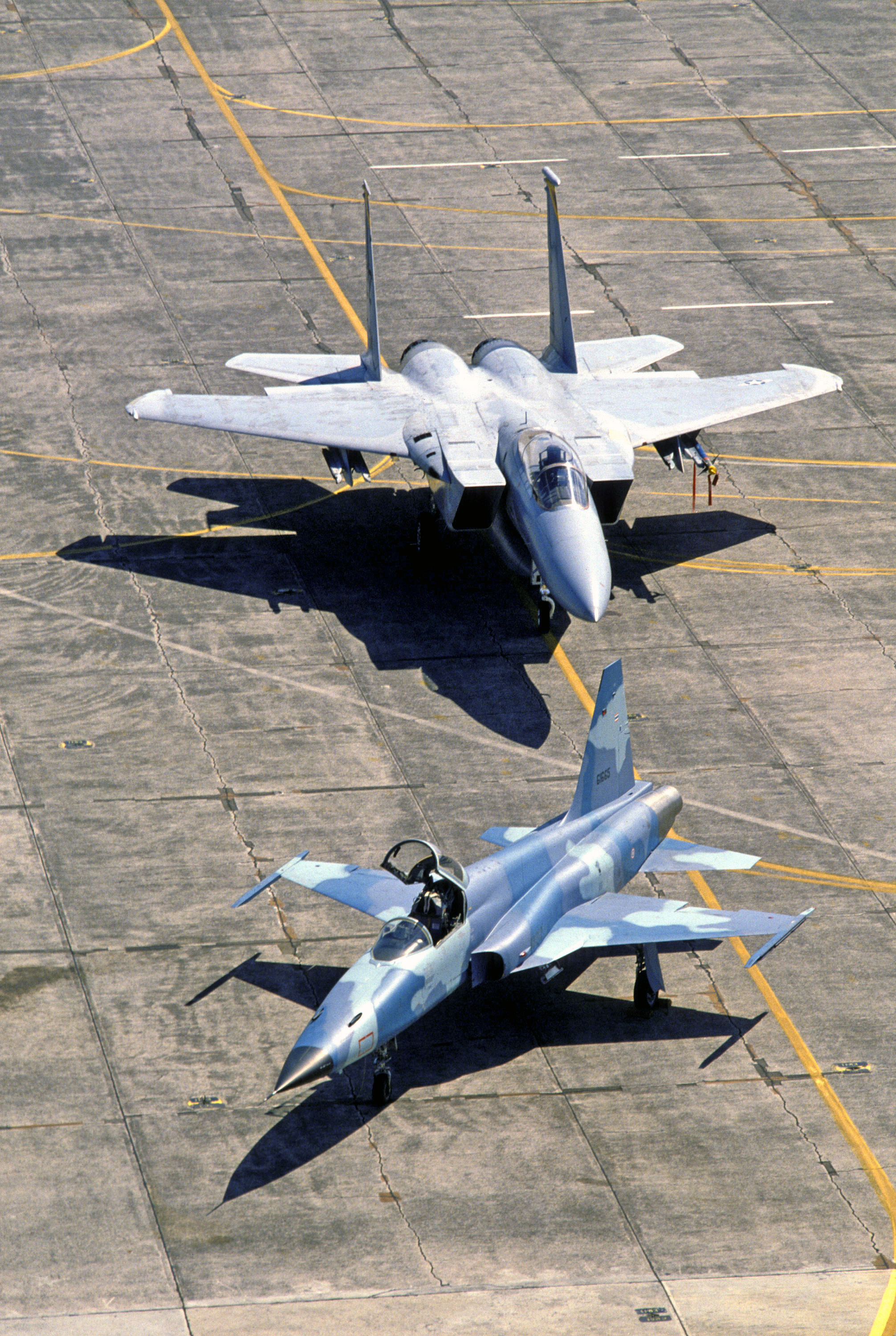
The F-15 was now the metric to beat and it was put up against everything else the United States had to offer at that time. F-4s didn't stand the slightest chance in simulated combat. In both Beyond Visual Range (BVR) and dogfights, the phantom was completely and utterly outmatched. At the end of the day, the smallest and most nimble little bugger was brought out to simulate a tough nut to crack. The little old F-5 was basically just used for target practice because even the smallest of craft couldn't shake an F-15 on their six. Steely-eyed, menacing, a genuine bird of prey. She had earned her handle; the "Eagle". Look at the difference in size. Logic dictates that the F-5 should be able to fly circles around the F-15.
Reality proved to be the opposite.
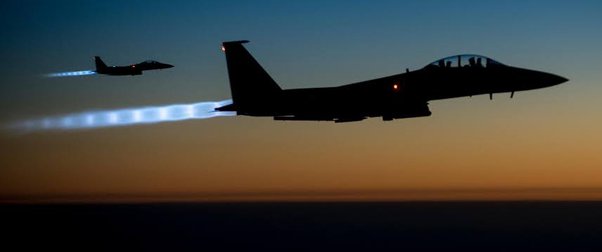
The F-15 had two massive engines, outputting about 50,000lbs of thrust. The aircraft, weighing only 45,000lbs fully loaded with fuel and munitions, could literally take off like a rocket and accelerate vertically.
Let me say that again because VERY few other aircraft, to this day, are capable of flying straight up. This one could and has broken the sound barrier *going up*, again, like a rocket, with 1970s technology. A few trials ran it with minimal weight, even down to the removal the paint so the bare metal showed, in full afterburner from a standstill. She climbed to over 100,000ft in a little over 3 minutes. Three. Minutes...
The fact of the matter was that an Eagle at full tilt starting from a full stop pointing straight up was faster than a Saturn 5 rocket for the first 50,000 feet. The eagle. Is faster. Than the rocket. That went to the moon.

Bet you've never seen this before. The F-15 was fitted with a LOT of new technologies. One of those bits was 'Variable Inlet Geometry' which, unlike any other aircraft of the time, altered the shape of the intake ducting to optimize the flow into the turbines for power. The front of the plane literally changed shape based on what direction the plane was facing in relation to the air speed, density, temperature, and throttle position, so unlike some previous afterburning jets before it, compressor stalls were a thing of the past.

She was a BIGGINS! The nose of the plane was huge. This gargantuan nose cap, called a "radome", housed the largest and most powerful RADAR dish ever fitted to an aircraft. It sucked up a gargantuan quantity of power made possible by the two monstrous engines providing it. It could see beyond 200 miles away and lock onto multiple targets within that range using the latest in radar technology that was finally adapted to air used called "Track While Scan", also unheard of. It was among the first fighters to successfully incorporate these new TWS systems and could not only acquire a lock on a target from two hundred miles out, but lock 8 individual targets and fire on all of them nearly simultaneously. Yet again, unheard of. Notice the words "radiation hazard" on the front. These aircraft had a system that prevented these dishes from being switched on while the gear was on the ground, lest they physically begin to fry anyone in front of them. Notice how far down the dish extends. It could face in any direction to that degree. Having such a large dish capable of pointing almost 180 degrees in all directions means it could see all.
Even today with the modernized variants, the AN/APG-82 (try saying that fast) dish installed on the F-15E is capable of seeing full fledged stealth aircraft beyond visual range. The effectiveness of even this has been buffed since the latest F-15EX was designed to carry a mindboggling 12 AMRAAM missiles and capable of locking an equal quantity of targets. The sheer size of the dish this plane wielded cannot be overstated. It was and is *staggeringly* powerful.
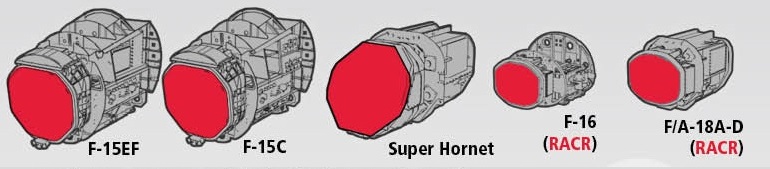
Here's a rough size comparison I stumbled upon, it's a totally different system but I digress. The F-16, capable of roughly 150 mile range in modern times, was outclassed in the 1970s because of how gargantuan the dish in the nose actually was.

The propaganda machine that the Soviets had put into motion was QUICKLY, forgive the pun, shot down. Everything they claimed to have accomplished was witnessed and recorded being done by the F-15 not only better, but faster. The only metric in which the MiG was still superior was top speed. Sustained speed, turn rate, G forces, all completely and visibly went down in the recordbooks. The Eagle could even achieve supersonic flight without afterburners. While the F-15 could travel mach 2.5, the MiG still topped out above mach 3.2, but there was a catch we'll get into later.

(*You're, I know) The world took notice. Several markets were interested in this new beast of a plane. Israel, Japan, Saudi Arabia, West Germany, all got their hands on the thing. Between that the the Gulf War, the F-15 gained a bit of a reputation.
No story of the eagle would be complete without mentioning the combat success of the aircraft. To this day, the F-15 maintains an air-to-air combat record of 104 kills to ZERO COMBAT LOSSES. It is the single baddest thing to ever have roamed the skies in actual employment. We're getting a bit into the future here, so let's get back on track.

The F-15 was and is a STAGGERINGLY effective fighter, but what of the plane it was specifically designed to exceed? In 1976, Soviet pilot Viktor Belenko went out on an assigned flight, broke off of his formation, and took his Foxbat to Japan where he landed and defected to America. The Japanese, being our now good buddies, offered to have American engineers come and look at the thing. What they found was... something of a bad joke.
You see, what we knew about the MiG was what we assumed from pictures, air shows, Soviet propaganda, and word from ground RADAR stations. When the Americans got their hands on the plane physically, they learned exactly what we'd expect today: it was all a ruse.
The Foxbat was huge because the soviets wanted to fit huge engines on it. These engines were quite effective but EXCEPTIONALLY short lived. For standard operation, they lasted about 150 hours between overhauls. In full afterburner, they required service immediately. At top speed, they literally destroyed themselves beyond the point of repair and grounded the aircraft until new engines could be acquired to replace them. So the top speed of the MiG was realistically about mach 2.5 or so, right around the F-15s sustainable top speed.
The wings were massive not for maneuverability and agility, but merely to get the thing off the ground. She wasn't light. This was because the Soviets couldn't quite work with titanium, and aluminum would simply weaken and fracture at the temperatures the frame would reach at speed so they resorted to using nickel-steel alloys which meant the hulking beast weighed a whopping 65,000lbs *dry weight*, meaning no weapons and no fuel. Loaded out, it tipped the scales at roughly 80,000lbs, about half the weight of a goddamn M1 Abrams.
The weight meant the aircraft could only pull about 4Gs in a turn before the wings would break off the fuselage, unlike most other fighters that will pull turns so tight they're more likely to incapacitate the pilot before suffering any damage at about 8 or 9Gs. Even with the large fuel tanks in the larger wings, the combat range was limited to under 200 miles which was pitiful at best.
The electronics were based almost entirely on vacuum tubes. When the soviets said "state of the art", they meant "EMP proof because this stuff is so old" and the RADAR lacked the ability to look down at all. So any aircraft below the nose of the MiG was completely invisible to it.
All of this added dramatically to the legend of the F-15 Eagle. The contrast was other worldly to what the future would hold and, oh boy, is that roster a colorful one.
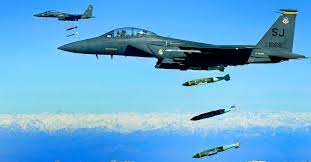
That time an F-15 brought down a helicopter... with a bomb.
In 1991 some Iraqis were getting a little spicy with their air power. A flight of five Mi-24 helicopters were on the ground and about to take off after dropping off their load of infantry. An F-15, about 4 miles out, laser designated a chopper and dropped a guided bomb. Not long after, the helicopter took off and the bomb was about to go to waste. The Weapon System Operator was having none of that. Between the asinine RADAR on his plane and the shiny targeting pod it carried under the wing, the helicopter was still designated and the two aviators watched the screen with intent as the bomb dropped in and nailed the heli at speed, reducing it to vapor.

That time an F-15 lost a wing and landed anyway.
During air combat training, an Eagle collided with another jet. The collision ripped off the right wing entirely to the fuselage. The other aircraft automatically ejected its pilot before completely falling apart. The weapon system officer on the F-15 ejected but the pilot stayed with the aircraft. He put the plane into full afterburner and regained control. Limping back to base he landed the plane at twice its rated landing speed and looked back on the plane commenting that he really should've ejected too. The plane appearently didn't perform like it was missing an ENTIRE WING. McDD came out to have a look and associated the successful landing under a single wing to a large air frame and "an overabundance of thrust".

That time an F-15 shot down a satellite.
With the Soviets most certainly putting up a fight in the space race, the orbital plane was getting a bit crowded. More importantly, both sides were developing methods of bringing each others satellites down. The soviets came up with a large rocket which brandished a net of sorts in the front that would effectively smash anything it ran into. The Americans, a bit more ambitious, got right to work designing a missile that could be loaded onto a plane. The project resulted in the ASM-135, or "Anti Satellite Missile. It was huge, about 18 feet long to be exact and weighed in at 2600lbs. Most planes could carry that kind of weight, but they couldn't physically carry the weapon without grinding it on the runway like a ski or climb with it, much less reach the altitude and speed necessary to deploy it. What better task for the F-15, which was effectively a jet-powered rocket, than to be the literal first stage for this behemoth of a missile. To test the missile and display it to the world, an old weather satellite was chosen to be the target. The eagle took off, reached several altitude points waiting for the optimal time, reached a 60 degree incline on the last point, locked the satellite using its own nose mounted radar, and launched the missile a bit short of mach 1 at 30,000ft. Somewhere roughly 300 miles over Hawaii, a missile and a satellite got intimate at 23,000 miles per hour. The world was in awe. It remains the first and last air-to-space kill in human history. Imagine that; the eagle is a threat to things not even within vicinity of the planet.
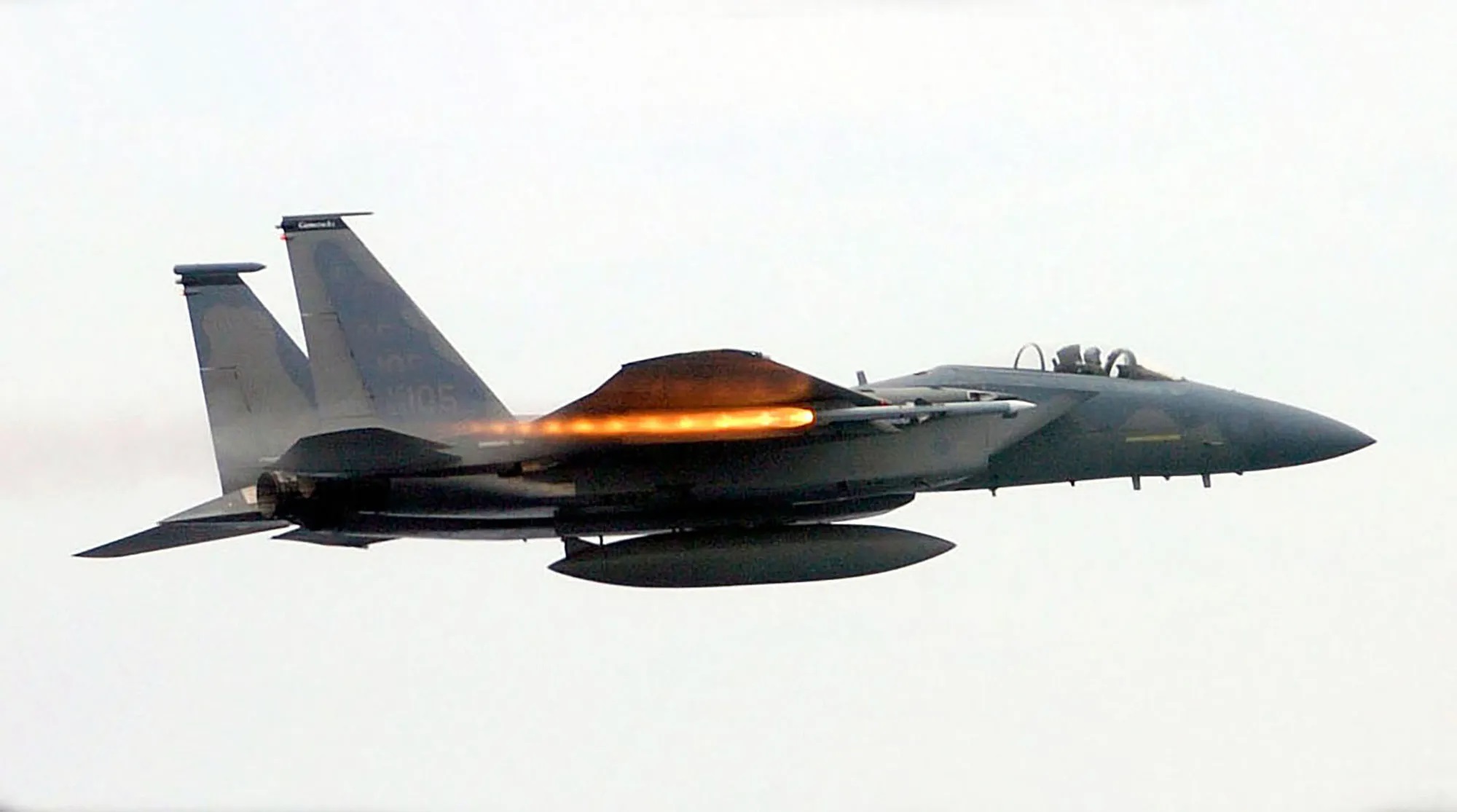
That time the F-15 scored the longest air-to-air kill ever recorded.
This one is kinda simple. Back down on earth where the Eagle is truly at home, for training purposes, a drone was launched and the Eagle was tasked with disassembling it at range. While the Eagle can lock targets at a disclosed range of around 200 miles, it's limited by the range of its hardware. Missiles don't burn their thrusters forever, usually less than 30 seconds or so. So a good missile with excellent targeting data supplied from an aircraft will ascend to great altitude where the air is thinnest. Being that these things are essentially suicidal solid state rockets, the higher the altitude, the more efficient the missile. The F-15, being a rocket itself, ascended to an undisclosed altitude, fired the weapon at an undisclosed distance, and confirmed the kill. The drone, which is quite small and launces its own chaff and flares to simulate a genuine target under a boot, was lit up by the Eagles enormous RADAR the whole way in and was swatted from the sky at (what we estimate) was roughly 100 miles (161km).

That time an F-15 accidentally shot another F-15 in the ass... and it landed anyway.
In 1991, a training exercise got a smidgen spicy when a live AIM-9 heatseeking missile was loaded onto one of two F-15s instead of the inert training variety that carries merely the tracking package of the missile to simulate a lock-on. When the pilot locked the other F-15, a missile flew off the rail when nothing at all should have happened at all. "Oh, shit". The aggressor warned his target practice meal what was happening and evasive maneuvers were taken but, not enough. The sidewinder blew off pieces of the vertical stabilizers, one entire elevator, damaged the left wing and both engines. The Eagle, being absolutely ridiculously massive and designed with a lack of the ability to give a damn, limped back to base and was repaired for a cool $992,000USD. She took a direct hit to the ass with a missile designed to blast aircraft from the sky and just kinda walked it off.
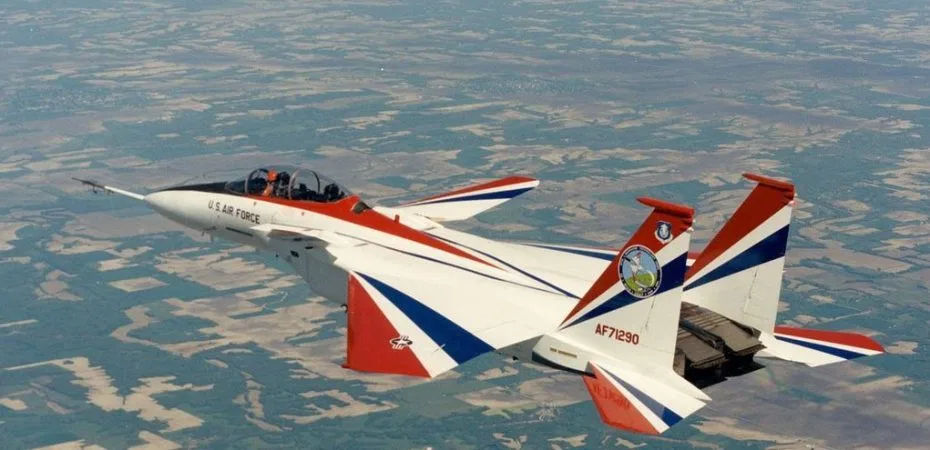
That time a research center dared McDD to see what else they could do with it.
Here she is, the red white and blue bird. This here is the F-15 STOL/MTD (or F-15 ACTIVE depending on your circle, though technically the ACTIVE had totally different nozzels
), "STOL/MTD" standing for Short TakeOff and Landing Maneuverability Technology Demonstrator. It is the end result of McDonald Douglass upping the ante and saying 'Hey, what if we increased the engines to 30,000lb of thrust each, gave them 2D thrust vectoring, and took the entire elevator section of an F-18 off and threw it on the nose of an Eagle as canards?' The end result was a plane without a gun but capable of landing and rising from exceptionally short runways and maneuvering at ridiculously low speed. Her stall speed was around 40 knots (46mph or 74kph) which is insane. Moreover, the landing strip required was reduced tp 1,650ft (500m) from 7,500ft (2,300m) meaning this particular configuration could use short streets to take off and land if necessary. Being that this was just a demonstrator, though, a neural network computer was installed to record and provide excellent flight and stability data that went on to be incorporated into the propulsion systems of the F-22.

But wait, there's MORE! Gonna title this one "Boeing has an idea".
Given the success of the F-22 and F-35, 50 years later the eagle was addressed again when Boeing was like "what if we coated it in stealth composites, bent the vertical stabilizers to 15 degrees as well as a few other things to lower the radar cross section, converted the conformal fuel tanks into internal weapons bays, and sold it as a low observable fighter!?" Boom, now it's an eagle that appears on RADAR as 1/5th the size of the original air frame, costs as much as a brand new F-35, but can be sold to the countries the US doesn't trust with such technology.

What was the soviets response to the Eagle?
This here is an Su-27. It is a *direct* response to the F-14 and F-15. The soviets once again put everything they had into a response and fielded this bad boy. It too is a hulking, agile, fast, advanced missile truck designed directly to counter the now set threat of the F-14 and F-15. The problem was that this thing, the culmination of the best the soviets had to offer was not even on-par with the original F-15 *ten years after its first flight* by which time the US had already rolled out the F-15E we know today which surpassed it in every way. Range, loadout, sensors, stability, agility, structural integrity, all outmatched the brand new airframe of the Su-27.
Don't get me wrong, the Su-27 is not a pushover, but even a full decade after the F-15 was released, the soviets, at the height of their empires power and the peak of their prowess, could not match the legend of the eagle. It would not be until 1988, a fill 15 years and several other fighter designs after the Eagle took to the skies, the soviets would hail their last fighter, the Su-35, which could finally match and surpass the eagle. But 7 years before the Su-35 could even reach the scene, in 1981 the US had far greater plans already under development.
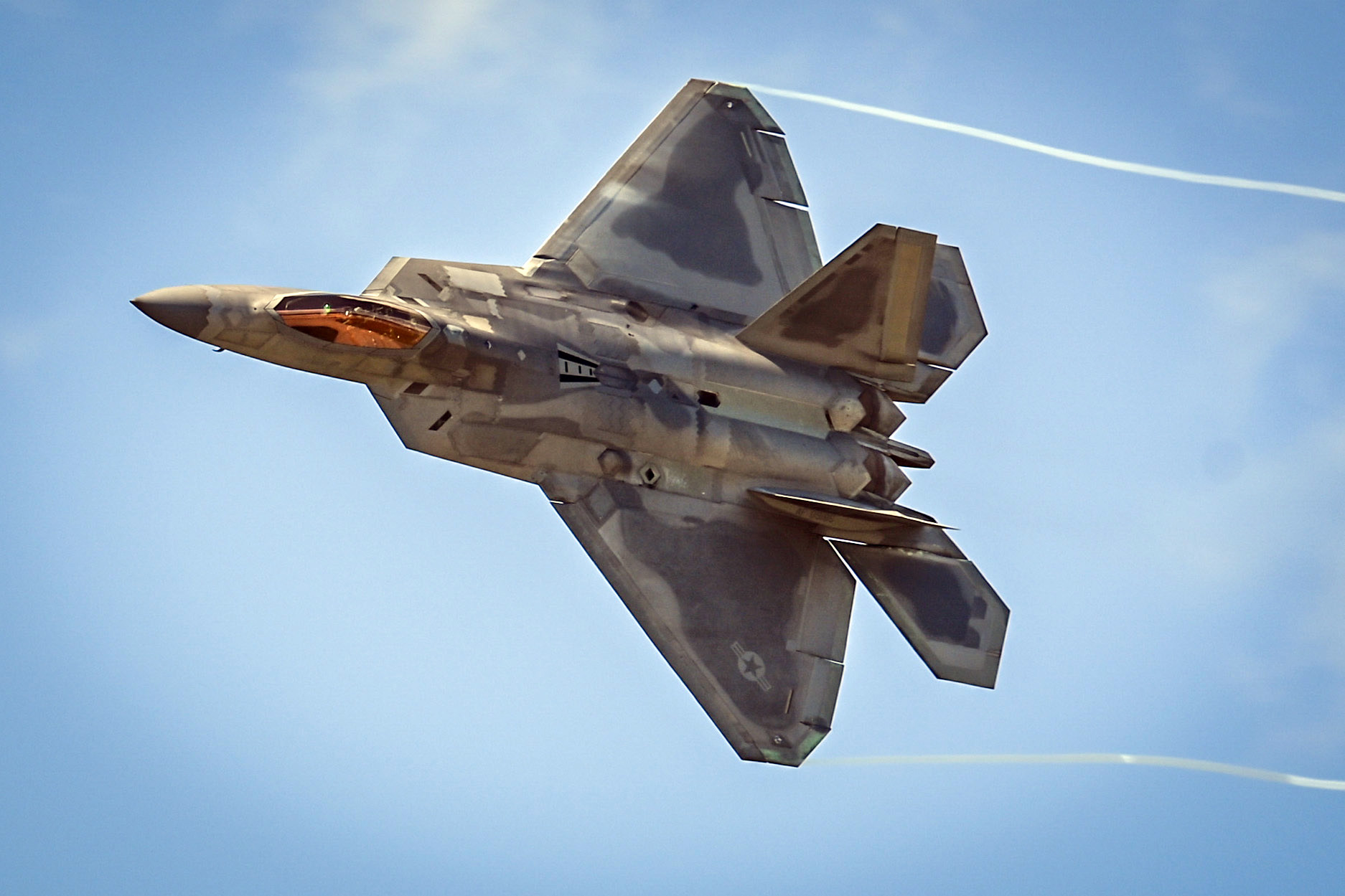
Far greater plans indeed...
THAT, ladies and gentlemen, is the absolute LEGEND of the F-15 eagle. Arguably the greatest fighter to have ever ruled the skies. And while sleeker, sicker aircraft such as the Raptor have existed for 30 years now, the Eagle will always be my number one.
d0o0o0d
I have heard that the design goal of the Foxbat was getting close enough to an SR-71 to shoot it down. Not sure if it's true.
ComicSansHumor
Thank you for sharing this, op. This is some quality content and it's nice to have the full story behind some of the mythical-sounding claims.
slick87gn
Great info!
Randomice
Very interesting. And also, very well written. Not overly technical but with some good humor injected into it. Thank you.
HogulusPrime
I don't typically enjoy reading about the excesses of the techno-military-industrial complex, but I did read this. So +1 for your well-written labor, friend.
Thewindcriesmary
Great read, thank you. Well written even a adhd’er like myself could stay with it, and didn’t have to read anything 2+ times. New found admiration for the F-15.
demoncatmara
Same here! Always liked the F-15 but discovered the Valkyrie from this extremely well written article. I've noticed, even though I have SEVERE ADHD, currently unmedicated (although methadone is calming me a little), if I'm reading about something I'm interested in, sometimes (but not always) it's super easy to focus
demoncatmara
Awesome article Mr Lemons! Always loved the F-15, but had never heard of the Valkyrie, much cooler name but I still like the F-15 best. Like another commenter mentioned, I have ADHD and was able to read this whole thing easily - do you write professionally? Because you definitely could, you're better than most out there (maybe all? I don't even know the names of other article writers)
demoncatmara
Except one guy on here, I'd say you two are about equal, his name is thefeckamisigningupwithfacebook or something like that, you both are amazing (and it's a massive compliment to say you're as good as him IMO, definitely check him out)