
sitenickname

31969

17

0

It's like a treasure hunt to find each one especially if it is a species I haven't seen in person before
This was one of my first bug photos Spilostethus pandurus which in Greek is commonly called a "Gentleman Bug" (especially the nymphs) as a counter the "Ladybug" so many of us know
==
I tried posting this for ArtCrawl a few months ago but my post wasn't showing in the gallery apparently because I had links for almost all these critters to explain more for those who are curious. Well, I worked really hard on gathering them all and my bug-crazy sister helped me identify them so just a little sad I cannot include the links (I even took a long break from imgur because of it) :(
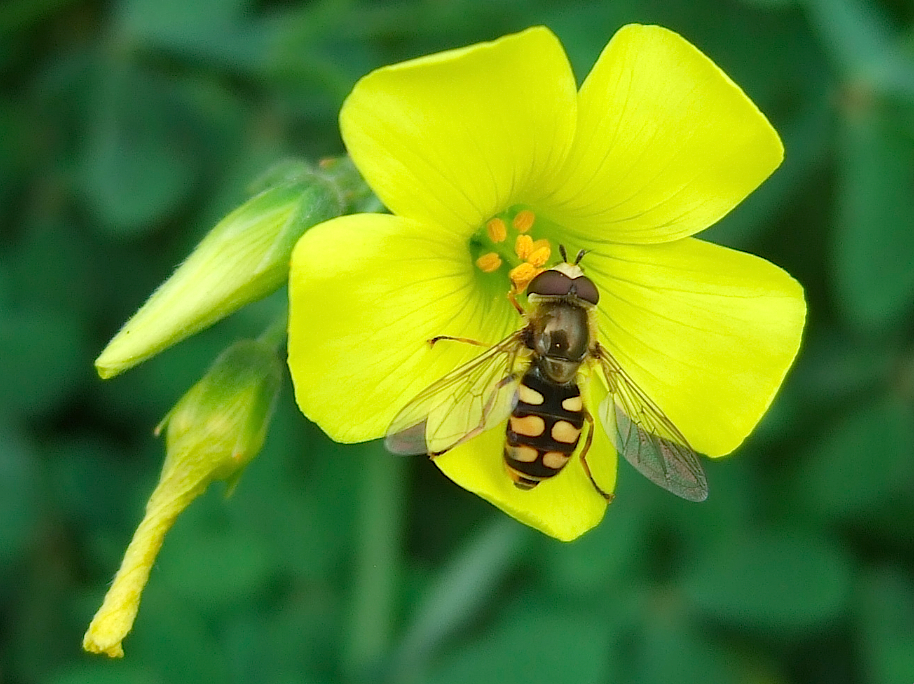
Soon I was enchanted by Hover Flies which I thought were bees at the time :) That's their plan though; it's called Batesian Mymicry to pretend to be dangerous when not
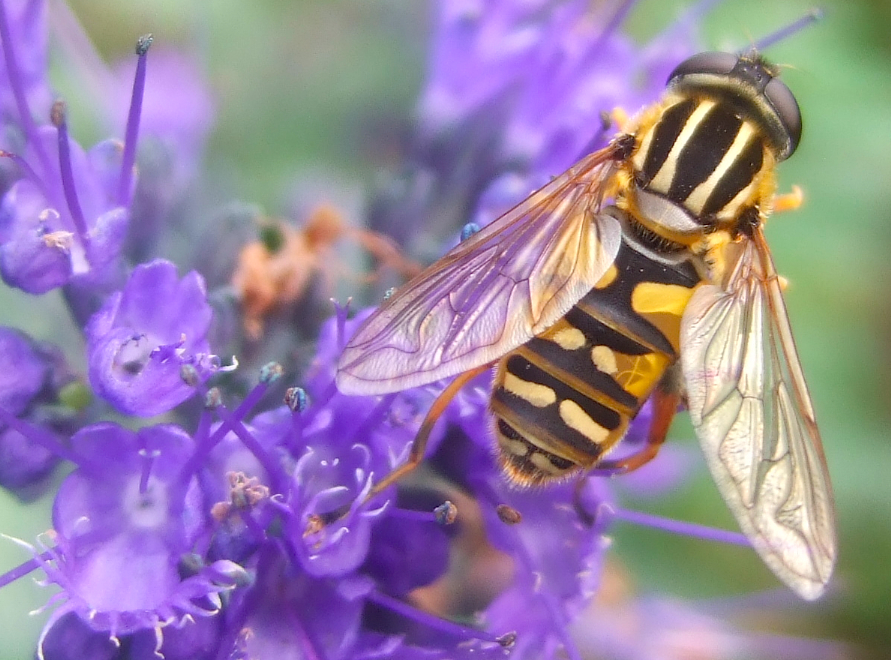
This Hover Fly above is from Hyde Park in London which is amazingly diverse for being in the middle of a mega-city
Flies are actually rather diverse, often beneficial (like the hoverflies) & we hardly notice most of them
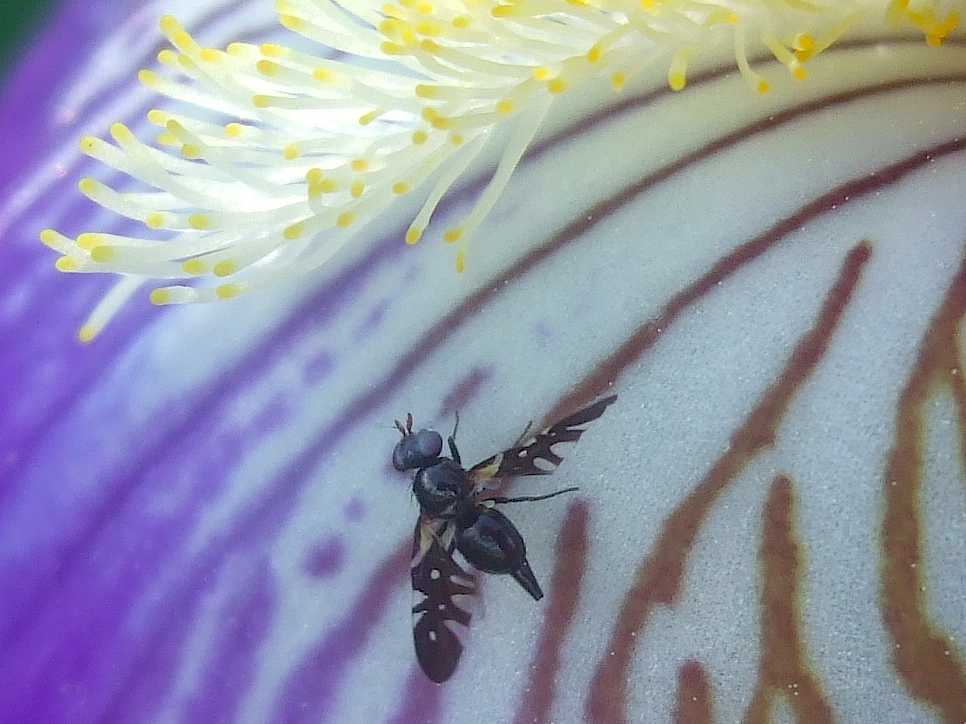
This is a Tephritid Fruit Fly (Aciura coryli) on an iris. This one is a female as evidenced by the ovipositor (for laying eggs not stinging)

Drone Flies are also in the Hover Fly family and totally benign; the young are called "rat-tailed maggots" because they develop in water and the "tail" is their breathing aparatus
The eyes come together here indicating this one is a male

I don't know much about this one in Cyrpus but so different from the others I had seen

The Band-Eyed Drone Fly (Eristalinus taeniops) adds some excitement (this is a female as can be seen by the space between her crazy eyes)

And this is the male (he needs more eyes to find the girls but the color difference is not exclusive to the males and most males are black-striped like the female above)

This gentle Soldier Fly is called a "Broad Centurian" (Chloromyia formosa) and males are beautiful with metallic green thorax & golden abdomen they look like flying gems (and yes, they have fuzzy eyes)
Soldier Flies break down organic material especially the "Black" variety (Hermetia illucens) so are super beneficial and good to see in compost despite they have taken on the Batesian Mimicry defense to look like a wasp even with windows in their abdomens to affect a wasp waist look

These are mating Tachinid Flies. It's a big family that parasitizes other insects often pests so they are part of the very beneficial biological Integrative Pest Control

Bee Flies are one of my favorites. They too can be quite diverse but almost all have a nectar-sucking beak to distinguish them

Small Cabbage White butterfly. One of the biggest crop pests in the world yet still so adorable. This one hitched a ride in as a pillar on some greens I bought from an organic farmer, crawled under a kitchen chair to form the Chrysalis, then greeted me one morning like this with an appeal to open the window

A "Queen of Spain" fritilary butterfly. I've only ever seen the one so super happy I was able to capture the image

Painted Lady is the most common butterfly on Cyprus and they are everywhere!

Dragon flies of course not related to the other flies, they eat mosquito larvae

This one (and dozens of others) were in the middle of Paris which is happily possibly even more diverse than London

Taking pictures helped me with my fears. I had to rescue this guy (a Giant House Spider) from the bathroom before my housemates stumbled across him. Like a big dog he's quite docile and is just looking for his true love

A cuddly Grass Spider waiting in Istanbul for one of the girls to invite him over – these are mellow and harmless spiders that includes the maligned Hobo Spider in the family which has been subjected to urban legends along the lines of the White Tail Spider in Australia and it's all now disproven bunk (even Wikipedia holds onto the BS)
There is no reason a widely distributed and common spider across Europe & Asia would suddenly become dangerous upon landing in the US. None!

Heather Crab Spiders are known not just for their crustacean poses, but also for their ability to change color for even better camouflage. This one on Latana has captured a Honey Bee and the Flit Flies are taking advantage
An 8-legged Wallpaper

Zebra jumping spider looking pretty in blue
Picture I took of a little visitor in a bowl

In a garden in the middle of Brussels I met a Green Shield Bug. These belong in the "True Bug" order (all bugs are insects but not all insects are bugs)

This is a Plant Bug (Mirid) nymph

Not just unbearably cute expressions on their faces but sometimes strikingly beautiful too
Garden Peaches with Pest Control

One of the most feared of them all is actually one of the most beneficial (they eat cockroaches, spiders, silverfish, bed bugs even) and yet harmless to humans (despite their appearance – they truly fear us way more than we do them). The House Centipede is not always inside; this one is protecting some organic peaches we grew.

Little running eyelashes, the first time I saw one I had no idea they existed; turns out "Spider with too many legs" is a valid search term. I stared at pics online until my fear abated and have since held them in my hands. The kitchen currently has one as a resident patroller and she does her job well
Not all bees are honeybees

This picture was taken in a fallow field on a friend's organic farm.I just love this black bee looking at me.
There are so many different bees in the world but so many people think there are just two, the Honey Bee and the Bumblebee.
This solitary bee is a "Violet-Winged Mining Bee" (Andrena agilissima), meaning she nests in the ground (we can see some dirt still clinging to her back and wings here):
https://en.wikipedia.org/wiki/Andrena_agilissima
Because they don't protect a hive solitary bees are highly unlikely to sting

This is a related Chocolate Mining Bee (Andrena scotica)
I just love how she's looking at me here, waiting for me to leave :D

This Andrena solitary bee benefitted from my presence (see the golden webbing she is triggering?)

This is a Long-horned bee in the middle of Paris (I think a Furrow Bee). I include here to highlight the difference in the sizes between this one and the next bee

There are literally thousands of different kinds of bees, and some are as important if not more than honey bees which despite their perils of late will survive because they get all the press but these solitary bees (which rarely if ever sting) need our help (plant local crops and flowers)

On the opposite side of bee size is a female Carpenter Bee who is also highly unlikely to sting (and the males despite their bluster – they are looking out for their ladies – don't even have a stinger). Carpenter Bees are also diverse with one even being blue!

Back to tiny with this stingless golden Sweat Bee (they are attracted to the salt in perspiration)

This cutey is a boy (long antennae & fuzzy face give him away; they also have no stinger). Short lives but adorable, they emerge before the females and flit around waiting for the girls. Since it's the females who make the nest these guys have to sleep outside

Despite the diet (honey bees), this Bee Wolf is both cute and charming

This European Paper Wasp (also quite common in North America) is taking a nap on the wall. These wasps are also quite benign and unlikely to sting.
I want to note here that Wasps are unfairly maligned. The world would collapse with them as they are fabulous at pest control (that which eats our food) and also come in a dizzying array of varieties from very tiny to one of the largest insects in the world (parasitizing the largest beetles in the world)
https://askentomologists.com/2015/09/27/please-stop-sharing-the-wasps-are-jerks-memes

Speaking of beetles: Longhorn/Longicorn Beetle also generally called a Capricorn Beetle

Also somewhat related Longhorn Beetle

An Oil Beetle; I believe she was laying some eggs when I found her; these beetles can ooze a substance that burns so best not to cuddle them but they have a super interesting life cycle
And Oil Beetles are related to the mythical but way more dangerous Spanish Fly (actually also a beetle)

The European mantis (Mantis religiosa); she was pretty annoyed that I noticed her
======
CATerpillar Tax!

This is a moth baby (Cucullia calendulae)
This one is harmless, but some moth babies are very, very dangerous including the Processionary Pine/Oak species so try not to touch
==
Thanks for sharing in my hobby today :)
locolobo13
Great shots!
sundaymondayhippyday
I love the fact you know so much about them @op… you’re wonderful! https://i.imgur.com/BwmtaWS
sitenickname
Thanks! Your kind comment was a nice surprise for me today :) :)