
116612

3368

109

#1 The concept of the fourth generation of warfare has emerged since the collapse of the Soviet Union, where the lines between combatants and civilians have become blurred. Rather than country against country, it is now country against violent non-state actor, namely civilians and ex-military. A rebel group is an armed political group that seeks to enact political change in the country(ies) they reside in. Almost universally they are classified as terrorist organizations by governments. There are many, many rebel and guerrilla movements in the world, but I tried to cover the major ones. As always, if you're questioning one of the items, just ask and I can provide the sources I used for it. Also, take the estimated strength with a large grain of salt, it's very difficult to number a rebel group.

#2 Allied Democratic Forces (1996)
Country: Various, such as Uganda, Democratic Republic of Congo, Angola, and Kenya
Conflict: Allied Democratic Forces Insurgency
Leader(s): Musa Baluku (pictured in the center)
Strength: 500
Goal(s): Create an Islamic fundamentalist state in Uganda and surrounding areas
About: Originally starting in Uganda, since 2017 the ADF has mainly expanded into the Democratic Republic of the Congo. Its attacks have nearly tripled over the years, with it being suggested that they've killed over 300 civilians and displaced of more than 150,000. The group isn't very understood because it focuses on a highly secretive nature, changing its goals and various dynamics. By the late 2000s, its leaders had ceased making public proclamations, avoided media, and harshly punished runaways in order to prevent the reveal of its objectives and activities. Its propaganda campaign builds around ethnic and jihadist narratives, so it's believed they still want to create an Islamic state. Islamic law is also being enforced with more vigor in its camps as its aggression toward the local population increases. The shift in tactics from building ties with local communities to killing them has led to widespread public resentment, but the governments in the areas are so weak they can't currently stop them.

#3 Al-Qaeda (1988)
Country: International
Conflict: If there's a conflict involving Muslims, they're likely in some way involved
Leader(s): Ayman al-Zawahiri
Strength: 40,000+
Goal(s): Removal of all foreign influences in Muslim countries, and the creation of a new caliphate ruling over the entire Muslim world
About: Al-Qaeda was founded by Osama bin Laden and several other volunteers during the Soviet-Afghan War. The founders grew a substantial financial network, and when the war ended they turned their sights on all Muslim countries to conduct their "great holy war". Al-Qaeda conducted several terrorist attacks in the Gulf states, but when the Gulf War ended they based themselves in Sudan. After being expelled from Sudan, they were granted refuge in Afghanistan by the Taliban. Here they called for global Salafi jihadism and issued a Fatwa against the US, who they saw as occupiers. Al-Qaeda, like all terrorist groups, believe that violence is the best way to get their political aims to be achieved. More specifically, they wanted to provoke the US into a long-lasting attrition war and rally the Muslim community against them. In 2001 they hijacked four passenger airplanes and attacked the United States, killing almost 3,000 people, and started the War on Terror. Although bin Laden has been killed, al-Qaeda still numbers in the tens of thousands, having terrorist cells and allies in many Muslim countries, such as Pakistan, Iraq, Somalia, Syria, etc..
Some groups part of al-Qaeda include al-Shabaab in Somalia, Tahrir al-Sham (formerly al-Nusra Front and despite how much they deny it) in Syria, Nusrat al-Islam in Mali, and al-Qaeda in the Islamic Maghreb, Arabian Peninsula, Indian Subcontinent, Caucasus and Russia, etc..

#4 Ambazonia Defence Forces (2017)
Country: Cameroon
Conflict: Anglophone Crisis
Leader(s): Ayaba Cho Lucas (he leads the Ambazonia Governing Council, who they report to)
Strength: 1,500
Goal(s): Secure the independence of Ambazonia
About: The ADF is a secessionist group that wants to establish the state of Ambazonia in western Cameroon. In 2017, there were protests over the government's alleged failure to give enough recognition to the English legal and education systems. After the Cameroon government responded with violence, various rebel groups emerged. They believe they are fighting a war for independence, typically conducting guerrilla warfare by taking advantage of familiar territory. They want to get Cameroon to be no longer able to afford to sustain a military presence in the region and therefore force them to give up. There is a complicated relationship between the "interm government" of Ambazonia and the ADF because the former doesn't want violence, but have since changed their position in 2018. Further, they attack any French-speaking parts of Cameroon, which is also against the interm government's wishes. The Anglophone Crisis has resulted in over 500,000 people being displaced and has killed about 3,000 people.

#5 Army of Jhangvi (1996)
Country: Pakistan
Conflict: Sectarian Violence in Pakistan
Leader(s): Currently Unknown
Strength: Low Hundreds
Goal(s): Establish an Islamist Sunni state in Pakistan and kill all the Shias
About: Lashkar-e-Jhangvi (LeJ) is a Pakistani terrorist organization that has performed multiple bombings within the country against Pakistan's Shia community. After the collapse of the Taliban government in Afghanistan, LeJ members became active in aiding other terrorists and have provided safe houses, false identities, and protection in Pakistani cities. LeJ specializes in armed attacks and bombings and has admitted to numerous killings of Shia religious and community leaders in Pakistan, with their strength estimated to be in the low hundreds. They typically act in small cells, but are involved with numerous other terrorist organizations, including al-Qaeda. LeJ is under greater scrutiny by Pakistani authorities, and Malik Ishaq (pictured, he was killed trying to escape) and other leaders have been killed in various confrontations. They are perhaps most famous for the bombing of a bus of Sri Lankan cricketers in 2009, as well as the 2019 Quetta bombing that killed 21 people.

#6 Army of Muhammad (2000)
Country: Pakistan and India
Conflict: Kashmir Conflict
Leader(s): Masood Azhar (pictured)
Strength: ~3,000
Goal(s): Overthrow Indian control over Indian-administered Kashmir
About: Jaish-e-Mohammed is another Pakistani-based terrorist organization, sometimes considered to be the deadliest in Pakistan. It aims to unite Kashmir with Pakistan and has been held responsible for attacks in India and Kashmir. After liberating Kashmir, it aims to carry its jihad to other parts of India, with an intent to drive Hindus and other non-Muslims from the Indian subcontinent. The group has carried out numerous terrorist attacks, including the attack on the Jammu and Kashmir legislative assembly in 2001, which led to 38 dead, and the 2019 Pulwama attack, which led to 40 dead. Scholars state that JeM was created with the support of Pakistan's Inter-Services Intelligence, and that the group continues to recieve Pakistan's backing, despite being banned. India frequently asks its neighbor to extradite Masood Azhar, but Pakistan refuses, saying there is a lack of proof against him. It continues openly to operate several facilities in the country.

#7 Army of the Men of the Naqshbandi Order (2006)
Country: Iraq
Conflict: Iraqi Insurgency
Leader(s): Izzat Ibrahim al-Douri
Strength: 50,000
Goal(s): Overthrow the government of Iraq, install a new Ba'athist regime, and end external influence in Baghdad
About: Also called the Naqshbandi Army, this terrorist organization was founded by former Iraqi Ba'athist officials after the withdrawal of Coalition forces from Iraq. The group's original focus was on protecting Naqshbandis in Iraq from the oppression they were facing from radical Sunni Islamist insurgent groups. The group relies on guerrilla tactics to attack US forces and depots in Iraq, originally focusing on attacking soft targets, building up its power, and using a media presence to expand its membership. They use vetting procedures like putting new members in a 90-day trial period in which they are required to carry out low-level attacks and endure physical abuse. The group played a major role in the capture of Mosul from Iraqi security forces in 2014, but its relationship with ISIS since 2016 is spotty. It is part of the Supreme Command for Jihad and Liberation, which mainly just consists of Ba'athist loyalists, but since the group is the strongest in the organization the names are sometimes used interchangeably.

#8 Atomwaffen Division (2015)
Country: US, Estonia, and Germany
Conflict: Terrorism in the US
Leader(s): James Nolan Mason
Strength: 200+
Goal(s): Instigate a race war and overthrow the US government to create a Nazi ethnostate.
About: The Atomwaffen Division is a neo-Nazi terrorist network, originally members of the white supremacist Iron March discussion forum. Atomwaffen distinguishes itself by its extreme rhetoric, influenced by the writings of neo-Nazi James Mason, who admired Charles Manson and supported the idea of lone wolf violence. Members of the Atomwaffen Division have been held responsible for a number of murders, planned terrorist attacks, as well as other criminal actions. They encourage flag desecration, murder of minorities, and have made plans and attempted to cripple public water systems, destroy the US power grid, and blow up nuclear plants. Weapons training is conducted by members of the US military, who are also among the group's members. The group's membership is mostly young, and it has also recruited new members on university campuses, such as through posters saying "join your local Nazis". They have non-US branches, like the Northern Order in Canada and the Sonnenkrieg Division in the UK.

#9 Boko Haram (2002)
Country: Nigeria
Conflict: Boko Haram Insurgency
Leader(s): Abubakar Shekau and Abu Musab al-Barnawi
Strength: 15,000
Goal(s): Institute Sharia law in Nigeria
About: Boko Haram is a militant terrorist group that wants to institute Islamic law in Nigeria. Boko Haram means "Western education is forbidden", and they have since their inception carried out several assassinations and large-scale terrorist attacks. Ideologically, Boko Haram is against Westernization, which it views as negatively impacting Islamic values. The group blames Western influences for Nigeria’s culture of corruption, which has contributed to a wide gap between the few rich and the many poor. Since the current insurgency started in 2009, Boko Haram has killed tens of thousands and displaced 2.3 million from their homes, and was at one time the world's deadliest terror group according to the Global Terrorism Index. The militants used to control swathes of territory in Nigeria and it temporarily allied with ISIS to create the Islamic State in West Africa, but many members split to become Boko Haram again a year later (because ISIS is full of losers now) and have lost much of the territory they used to control.

#10 Conspiracy of Fire Nuclei (2008)
Country: Greece
Conflict: Anarchism in Greece
Leader(s): Unknown
Strength: Unknown
Goal(s): End the Greek state
About: The Fire Cells are a far-left anarchist organization infamous for its mailing of bombs to prominent European political leaders in 2010. They also have conducted several fire bombing attacks and have used cruel time bombs. Monthly waves of arson have been followed by proclamations expressing solidarity with arrested anarchists in Greece and elsewhere. As time has gone on, they have increasingly adopted a "revolutionary mindset", trying to declare a common front with other anarchist groups, going as far as to parcel bomb police stations to free them. They believe that Greece is going to enter a revolutionary period, and their bombings will encourage other anarchist groups to act. Christodoulos Xeros (pictured) was an alleged associate of the group, and they plotted to assassinate him because they said he was a traitor for failing to bomb a police station. They managed to outlast Greece's Revolutionary Struggle, who bombed the American embassy in Athens, because their last main leader was arrested in 2016.

#11 Continuity Irish Republican Army (1986) and the Real Irish Republican Army (1997)
Country: Ireland
Conflict: Dissident Irish Republican Campaign
Leader(s): Michael McKevitt is the leader of the Real IRA, idk who the leader of CIRA is
Strength: ~300
Goal(s): Get Northern Ireland to join Ireland, as well as end Ulster loyalism
About: From the late 60's to 1998, Ireland went through the Troubles, which was a conflict between Ulster loyalists, who were Protestants and wanted to remain in the UK, and Irish separatists, who were Catholics and wanted N. Ireland to leave the UK. The conflict ended after the Good Friday Agreement, but paramilitary groups like CIRA and the "Real" IRA cannot accept this. These groups are opposed to the northern Ireland peace process and want to resume hostilities and "retake" the mantle of the IRA. The CIRA is not as big and has not been as active as the Real IRA, and there have been a number of splits within the organisation since the mid-2000s. Still, both groups are known for attacks against northern Irish security forces, and RIRA is considered to be the most active "dissident republican" paramilitary group against British security forces. The current campaign is marked by only occasional violence, although hundreds have been injured since 1998 as a result of the campaign.

#12 Coordinadora Arauco-Malleco (1998)
Country: Chile
Conflict: Mapuche Conflict
Leader(s): Héctor Llaitul and Ramon Llanquileo
Strength: Unknown
Goal(s): Return of ancestral lands in the Mapuche area
About: CAM is an indegenous mobilizaiton group that has emerged in south-central Chile that seeks autonomy and complete territorial recovery of the region of what they call "Wallmapu". CAM emerged with the rise of environmentalism and the perceived hostility of politicians against native land. The group is a representation of Mapuche militancy and is in conflict against Chilean security forces. CAM set itself apart from other Mapuche organizations by putting forward a uniquely Mapuche anti-colonial, anti-systemic, anti-statist, anti-capitalist, and non-leftist political project. They not only want to reclaim Mapuche lands, they also want to restore it to its most traditional form. CAM has declared war on both the capitalist structures operating in Wallmapu (mainly forestry and mining companies) as well as Chile itself. CAM's strategy is that of offense, where they try to re-occupy property, which they call "territorial control", and burning and attacking capitalist infrastructure.

#13 Democratic Forces for the Liberation of Rwanda (2000)
Country: DR of the Congo and Rwanda
Conflict: Kivu Conflict
Leader(s): Callixte Mbarushimana
Strength: 5,000
Goal(s): Restore the Hutu Rwandan government
About: FDLR is a merger group that was active in the Second Congo War and was founded through an amalgamation of other Hutu groups and Hutu government officials. They were originally part of Interahamwe, who helped commit genocide against the Tutsis during the 1994 Rwandan genocide. The FDLR has been accused of recruiting child soldiers, rape, and systematic looting. The group’s original objective was to overthrow the Rwandan government by force and returning the Hutu political leaders to power, but now call for an inter-Rwandan dialogue and a grant of security for refugees to return to Rwanda. It fights Tutsi groups in the countries, and the government of DR Congo and Rwanda cooperate to fight the group, with its political wing almost collapsing completely. Still, they are known for their assault, physical and psychological, of hundreds of civilians in order to intimidate their foes and still number in the thousands.

#14 Donetsk and Luhansk People's Republics (2014)
Country: Ukraine
Conflict: War in Donbass
Leader(s): Denis Pushilin and Leonid Pasechnik, respectively
Strength: 40,000
Goal(s): Either form the Federal State of Novorossiya, or join Russia
About: In 2014, pro-Russian anti-government groups started an armed conflict in the Donetsk and Luhansk oblasts in eastern Ukraine. They are assisted by Russia, with it estimating that at the height of the conflict Russian paramilitaries made up between 15-80% of the combatants. The organizations have occupied government buildings and overwhelmingly voted for self-rule, although the elections have been questioned. Regardless, they declared their independence and formed the confederation of Novorossiya. In the war, thousands have been killed with over a million Ukrainians fleeing the area. The "New Russia" project has been seen as a colossal failure, thanks to more than 20 attempts at ceasefires and killing of civilians, but there is still sporadic fighting. The two "republics" have various battalions that align with them, although there are some other independent forces and their relationship with Russia is very friendly. The warfare has caused a destabilized Ukraine, which also lost control of Crimea to Russia.

#15 East Turkestan Islamic Movement (1988)
Country: China, Pakistan, Afghanistan, and Syria
Conflict: Xinjiang Conflict
Leader(s): Abdullah Mansour
Strength: ~4,000
Goal(s): Create an Islamic state in Xinjiang and the entirety of Central Asia
About: ETIM is an Uyghur nationalist movement, now called the Turkestan Islamic Party. They are part of the Xinjiang independence movement, who seek independence for the Xinjiang Uyghur Autonomous Region of China. They were considered to be the most militant of all Uyghur groups, known for numerous acts of terrorism and their affiliation with al-Qaeda. Critics say that the threats ETIM itself makes are exaggerated, and that ETIM embellishes its own image and commits psychological warfare against China with its false threats. Still, it has claimed bus bombings in Shanghai ahead of the 2008 Olympics, and are considered battle-hardened thanks to their participation in the Syrian Civil war. One of their methods is to fuel hatred between Han and the Uyghur ethnic groups in order to increase the threat against China. China does not always distinguish between legitimate political dissent and the advocacy of violence to overthrow the government, and it has used counterterrorism as a pretext to suppress Uyghurs.

#16 FARC Dissidents (2016)
Country: Colombia, Peru, and Venezuela
Conflict: Colombian Conflict
Leader(s): Ivan Marquez (pictured in the center)
Strength: 2,500
Goal(s): Overthrow the national government and create a communist-agrarian state
About: In 2016, Colombia managed to sign a peace treaty with the Revolutionary Armed Forces of Colombia, a movement that wanted to represent Colombia's rural poor and seize power. Not everyone accepted this treaty, and felt it was an insult and betrayal, and instead have declared a "new chapter" of the Colombian Conflict. FARC dissidents have been known for participating in the drug trade and have been called narcoterrorists, and it is somewhat agreed that the number of dissidents is growing. Dissident groups would become part of the rivalries between the different drug cartels, allying with some and fighting against others. The Colombian government is finding it difficult to accurately track the growth of these groups, in large part because it has proven next to impossible to follow their actions or their recruitment drives. Their methods generally remain the same: guerrilla tactics and terrorism.

#17 Fidai Mahaz (2013)
Country: Afghanistan
Conflict: War in Afghanistan
Leader(s): Mullah Najibullah
Strength: 8,000
Goal(s): Cancel the peace process in Afghanistan and force government and NATO forces to leave the country
About: Fidai Mahaz is a Taliban splinter group that disagreed with Mullah Mansour becoming leader after the death of Mohammad Omar. The Afghanistan government knows that some in the Taliban rejected peace talks and would probably break away from the main group. This group has switched to become "hardliners" and ally with ISIS as they want to undermine the peace process and engage in feuds with the Taliban. A tiny faction such as Fidai Mahaz poses no military threat to the Taliban, but such groups are spreading propaganda, including a claim that Omar was poisoned, that could further undermine insurgency unity. Regardless, the group tries to develop itself by getting a high profile for terrorist actions. They are known for several suicide bombings and assassinations, including the killing of British-Swedish reporter Nils Horner and even officials of the Taliban.

#18 Free Papua Movement (1963)
Country: Indonesia
Conflict: Papua Conflict
Leader(s): Jacob Hendrik Prai
Strength: Unknown
Goal(s): Create the independent state of Papua, or join with Papua New Guinea.
About: OPM is an independence movement that consists of three elements: a disparate group of armed units each with limited territorial control with no single commander; several groups in the territory that conduct demonstrations and protests; and a small group of leaders based abroad that raise awareness of issues in the territory whilst striving for international support for independence. Indonesia's efforts to exploit the resources and assimilate the indigenous populations into the national administration met sporadic armed resistance from the OPM and aroused international concerns. It has attempted peaceful dialogue, but has also undertaken military actions, including summary executions and taking hostages. Indonesia has been accused of conducting a genocidal campaign as well. The conflict has resulted in the deaths of hundreds of thousands, with the Indonesian government creating somewhat of a police state, suppressing freedom of association and political expression in the region.

#19 Front for the Liberation of the Enclave of Cabinda (1975)
Country: Angola
Conflict: Cabinda War
Leader(s): Various
Strength: Low Hundreds
Goal(s): Create the independent state of Cabinda
About: FLEC is a guerrilla movement that wants to achieve the independence of the Angolan province of Cabinda. FLEC created a government in exile and are known for destroying various infrastructure in Angola, and the kidnapping of individuals, including a UN officer. They are fueled by anger over the government taking huge profits from the province's oil reserves that make Angola one of Africa's top two producers. FLEC is fragmented, creating dozens of separatist groups. FLEC-Armed Forces of Cabinda is considered to be the most radical faction that poses the most serious military threat to the government. FLEC has committed various human rights abuses, yet at the same time are at risk of ill-treatment from government authorities. It is most known for its attack on the team bus of the Togo national football team, resulting in the deaths of the assistant coach and others. Various FLEC factions have been marginalized during the peace process due to their continued military attacks.

#20 Hamas (1987)
Country: Israel
Conflict: Gaza–Israel Conflict
Leader(s): Ismail Haniyeh
Strength: 20,000 in their military wing
Goal(s): Liberate Palestine and create an Islamic state from the Jordan River to the Mediterranean Sea
About: Hamas is a palestanian political organization that calls for the destruction of Israel. Hamas led the charge in using suicide bombings against Israel in the 1990s and 2000s, though in recent years it has shifted to rockets and mortars as its weapons of choice. The organization also offers Palestinians a robust network of social services, which it developed as an alternative to deeply corrupt Palestinian institutions. Hamas stresses jihad as the sole and immediate means to solve the problem of Palestine. Hamas aims to create an Islamic state in all of Palestine. The immediate means to achieve this goal is the escalation of the armed struggle, with the participation not only of Palestinian Muslims but of the entire Islamic world. Although Hamas formed a Palestinian Authority unity government with its rival Fatah in early 2006, the two groups continue to clash, often violently. Hamas took control of Gaza in 2007, while its officials were ousted from government positions in the West Bank. Despite peace talks, Hamas has refused to disarm and shows no signs of it renouncing its dedication to violence.
Hamas along with six other factions, including the Islamic Jihad Movement, all make up the Alliance of Palestinian Forces, a loosely organized group that wants a sovereign Palestinian state. None of these members are part of the Palestine Liberation Organization, since they reject the Oslo Accords.

#21 Hezbollah (1985)
Country: Lebanon
Conflict: Israeli–Lebanese Conflict and the Syrian Civil War
Leader(s): Hassan Nasrallah (pictured on the screen)
Strength: 25,000+
Goal(s): Establishment of an Islamic government across the Arab world that will "liberate" Jerusalem and the entire area of Israel
About: Hezbollah is a terrorist group in Lebanon, responsible for many murderous attacks against Israelis, Americans, and other targets around the globe. Despite its rhetoric of freeing Lebanon from foreign occupation, Hezbollah has made no secret that it is heavily supported by foreign powers, namely Iran. Iran has transferred mass quantities of weapons, fighters, and other supplies to Hezbollah through its Islamic Revolutionary Guards Corps, using Syria as a transfer point. Until September 11, 2001, Hezbollah was responsible for killing more Americans than any other terrorist organization. Further complicating Hezbollah’s status, the terror group has woven itself into Lebanon’s social fabric, setting up charities and providing services in the southern part of the country where government authority is weaker. These social services have boosted Hezbollah’s popularity. However, this image upon which the group's legitimacy rested has been severely damaged due to the sectarian nature of the Syrian Civil War in which it has become embroiled.

#22 Houthi Movement (1994)
Country: Yemen
Conflict: Yemeni Civil War
Leader(s): Abdul-Malik al-Houthi
Strength: ~160,000
Goal(s): Fight corruption in Yemen and secure greater autonomy for Houthi-majority regions, possibly they want to rule Yemen as a whole as well
About: The Houthis gained support from Shia Yemenis fed up with the corruption and cruelty of the long-time authoritarian president and Saudi ally, Ali Abdullah Saleh, particularly during the aftermath the US invasion of Iraq. During the Arab Spring, the Houthis, as one of the only revolutionary groups with military experience, steadily gained control of territory outside their northern heartlands. In 2015 they allied with their former enemy Saleh and overthrew the new president, but they then killed Saleh after they believed he was going to join the Saudis. Saudi Arabia and the UAE launched a military campaign in Yemen, and throughout the war the Houthis have been accused of torturing and killing journalists and critics, siphoning off aid supplies, using civilian infrastructure as a shield for military activity, and persecuting the country’s minorities. The Houthis have launched repeated attacks against Saudi cities, widely seen as a proxy war between Saudi Arabia and Iran, who are believed to support them.

#23 Informal Anarchist Federation (2003)
Country: International, but mainly Italy
Conflict: Insurrectionary Anarchism in the World
Leader(s): Leaderless
Strength: Unknown
Goal(s): Total revolution to topple the world's governments
About: FAI is a nihilistic anarchist organization that originally opposed capitalism and the present European order in Italy. However, it now is an umbrella organization that consists of various groups and figureheads in several countries, where they want to begin an "insurrection" to establish individualist anarchism. The group has claimed responsibility for several bombing campaigns, usually through mail bombs, against politicians and industry leaders. It has also assassinated people, including an Italian executive at a nuclear company in 2012. As an international group, it has conducted arson in Russia, Argentina, and the UK as they want to "paralyze the national economy" of the countries. An Italian intelligence official cited Greece, Spain, Mexico, and Chile as other countries in which the FAI was spreading networks into. They have strong ideological ties with the Greek anarchist groups, especially the Conspiracy of Fire Nuclei.

#24 Islamic State (1999)
Country: International
Conflict: If there's a conflict involving Muslims, they're in some way involved
Leader(s): Abu Ibrahim al-Hashimi al-Qurashi
Strength: ~100,000 in total, Pentagon says about 30,000 just in Syria and Iraq alone
Goal(s): Take over the entire Earth and establish a world-wide Caliphate
About: The Islamic State of Iraq and Syria/Levant emerged to prominence when they broke off from al-Qaeda and proclaimed itself as a worldwide caliphate. It managed to overpower government forces in Iraq and parts of Syria in 2014, becoming one of if not the strongest terrorist organization in the world. An international coalition formed to fight against ISIS, who started to commit extensive genocide throughout the Middle East and spread their network to almost every Muslim country in the world. Following major defeats by various forces, including other rebel groups, ISIS has lost almost all of its significant territories as of 2019, and its supreme leader has been killed. ISIS is considered particularly unique, where it drew supporters from Muslims across the world thanks to its extensive propaganda campaign and use of social media, with some saying the latter is more sophisticated than most US companies. One difference between ISIS and other jihadist movements, including al-Qaeda, is the group's emphasis on apocalypticism. Despite defeat, many groups still affiliate with it and continue to conduct insurgencies.

#25 Kachin Independence Army (1961)
Country: Myanmar
Conflict: Kachin Conflict
Leader(s): N'Ban La and Gam Shawng
Strength: 12,000
Goal(s): Create an independent Kachin State and secure self-determination
About: KIA is the military wing of the Kachin Independence Organisation, which seeks to liberate the ethnic area of the Kachins in Northern Myanmar. Since Burma’s military junta began a transition to a quasi-civilian government, its rulers have promised an imminent national cease-fire with various ethnic armed groups. KIA believes this is a farce, and that the Kachin people will never be able to practice their traditions without the Burmese interfering. The areas they control are deeply militarized and they have displaced over 100,000 civilians, who have fled to China and are facing an identity crisis. Civilians have also been killed in fighting as well as having been specifically targeted. Child soldiers have also been a major part of the Myanmar Army's and insurgent groups' soldiers. There have also been reports of Burmese military attacking refugee camps and committing alleged war crimes. Both sides have been accused of using landmines, systematic rape, and torture.

#26 Libyan National Army (2014, in its current form)
Country: Libya
Conflict: Second Libyan Civl War
Leader(s): Khalifa Haftar (pictured)
Strength: ~25,000, including allied militias
Goal(s): Restore the House of Representatives as the sole legitimate government in Libya
About: After the First Libyan Civil War, Libya has become divided between the UN-backed Government of National Accord and the House of Representatives (also called the Tobruk Government). This happened because in the 2014 election, two constitutional claims were brought before the Supreme Court, where one invalidated the entire legislative process leading to the establishment of the HoR. The House refused to take office and then moved their government to Tobruk and started the Second Libyan Civil War. Although the Government of National Accord is currently the only internationally recognized government in the country, its authority is still not recognized by the HoR, as specific details acceptable to both sides have not yet been agreed upon. LNA has launched numerous offenses against the GNA and their Libyan Army, which is forced to rely on militias for help, and they both fight the Islamic State. The LNA has gained swaths of territory in Libya, more than the government itself, with thousands of people dying in the war and an uncertain future for Libya.

#27 Lord's Resistance Army (1987)
Country: Uganda, Central African Republic, and DR of the Congo
Conflict: Lord's Resistance Army Insurgency
Leader(s): Joseph Kony (pictured on the left)
Strength: ~100
Goal(s): Overthrow the Ugandan government and establish a theocratic state centered around their leader
About: Emerging in northern Uganda in the 1980s, the LRA has engaged in the abduction, killing, and mutilation of thousands of civilians across central Africa. It has been considered one of the cruelest and most enduring armed groups in Africa, having abducted over 60,000 children and has brutalized communities. It appears to largely function as a personality cult of its leader Joseph Kony, a self-declared prophet. After mounting pressure from international and local activist groups, the US encouraged the International Criminal Court to issue arrest warrants against the group's leaders, one of the first ever sets. Military task forces have managed to force Kony into hiding, and the US largely left in 2017. However, it still continues to raid and pillage villages, especially attacks on diamond and gold mining sites in areas that do not have a military presence. Their campaign of terrorism has led to the deaths over 100,000 people and the displacement of possibly over a million people.

#28 Mai-Mai (~1998)
Country: Rwanda and DR of the Congo
Conflict: Kivu conflict
Leader(s): Various
Strength: Unknown
Goal(s): Various, ranging from creating ethnostates to freeing mountain gorillas
About: The Mai-Mai are a collection of various rebel groups that were created to defend their local territories from other armed groups. The Mai-Mai insist that they are Congo’s true patriots, but after the invasion by Rwanda their armed forces have been led by warlords and politically motivated resistance fighters. However, the groups themselves are small and they frequently relocate, unable to create organizational structures to rule civilians. Mai-Mai groups have clashed with nearly everyone, whether they be other rebel groups or UN peacekeepers, and have also been known to target civilians. There are reports of them looting villages, raping women, and leaving areas insecure and poor. Although the Mai-Mai, either as a group or as individual groups, were not party to the 1999 Lusaka Accord meant to end the Second Congo War, they remained one of the most powerful forces in the conflict. The lack of cooperation from some groups has been problematic for the peace process.

#29 National Liberation Army (1964)
Country: Colombia
Conflict: Colombian Conflict
Leader(s): Nicolás Rodríguez Bautista
Strength: 2,500
Goal(s): Overthrow the government to form a Marxist state that can combat Colombia's corruption and "unequal political participation"
About: ELN is a communist guerrilla organization that has focused on kidnapping, extortion, and attacks on economic infrastructure in Colombia. And while it eschewed drug trafficking for decades, it has recently been linked to the narcotics trade. Annually it conducts hundreds of kidnappings for ransom, often targeting foreign employees of large corporations, especially in the petroleum industry. Some consider it to be the largest guerrilla group in Colombia. Ever since FARC signed the peace treaty, areas that were originally under FARC control have been invaded by ELN forces, putting the lives of civilians at risk and forcing them to remain isolated. In some cases, the ELN has been absorbing dissident FARC elements into its ranks. In 2017, it was estimated that 45% of all displacement in Colombia was caused by the ELN. Colombia has tried to sign a peace treaty with the group, but all attempts have currently failed due to their continued use of violence and refusal to release certain captives.

#30 National Liberation Front of Corsica (1976)
Country: France
Conflict: Corsican Conflict
Leader(s): Various
Strength: ~500
Goal(s): Liberate Corsica from France and create a Corsican ethnostate
About: FLNC is a Corsican nationalist group that wanted to create an independent state on the island of Corsica. When the group was united, it conducted bombings aimed at public buildings, banks, tourist infrastructures, military buildings and other perceived French symbols, in addition to aggravated assault against civilians, armed bank robbery, and extortion against private enterprises through so-called "revolutionary taxes". The attacks were usually performed against the island's infrastructures, but it was also not uncommon for the FLNC to have individual people as targets. However, the main group called for a cease fire in 2014 and 2016, but splinter factions have refused to settle and continue an armed campaign. The splinter factions typically use the same methods as the old group, threatening to attack property of foreign investors, and demanding the selling of land to non-Corsicans be prohibited.

#31 National Movement for the Liberation of Azawad (2011)
Country: Mali
Conflict: Northern Mali Conflict
Leader(s): Bilal Ag Acherif
Strength: 10,000
Goal(s): Create the independent State of Azawad
About: MNLA is a Tuareg militia group that wants an independent state in northern Mali called Azawad. MNLA say they want this state for all the peoples of northern Mali, not just the Tuaregs. However, since almost all members of the group are Tuareg, it's figured they really just want a Tuareg state. During the Tuareg rebellion, the group humiliated the government forces, causing them to lose consistently and forcing them to frequently retreat. The MNLA has a secular nationalist bent, but the rebellion in the north is helping Islamist extremists expand their foothold in the country. Therefore, the MNLA is generally disregarded and underestimated because it has receded and allowed al-Qaeda-linked groups to take over the field. Still, after the main offensive, the MNLA has even agreed to work with government forces to an extent to end terrorism in Azawad. This cooperation led to a cease fire, but after protesters were violently confronted in 2013 the group has resumed fighting.

#32 National Revolution Front (1963)
Country: Thailand and Malaysia
Conflict: South Thailand Insurgency
Leader(s): Several
Strength: ~30,000
Goal(s): Create an independent state for the Pattani, but also form an Islamic state
About: BRN is a separatist group that wants to create an Islamic socialist independent Pattani state in Thailand. It consists of three main factions, with the BRN-Coordinate considered to be the most active. This one favors a more Salafist ideology, rejecting the socialist aspect, and is involved in political activism in the mosques and indoctrination at Islamic schools. The BRN-C sees no reason for negotiations and is against talks with other insurgent groups. The BRN-C has the vision of becoming a mass-organisation. It has as its immediate aim to make southern Thailand ungovernable. The insurgency in the Malay-speaking region of the predominantly Buddhist country has killed some 7,000 people over the past 15 years and has flared on and off for decades. The BRN-C has been involved in numerous arson, bombing, and murder attacks to create an atmosphere of fear and uncertainty. Thai military observers believe that the attacks are mostly carried out by its loosely affiliated and clandestine RKK outfit.

#33 Naxalites (1969)
Country: India
Conflict: Naxalite–Maoist Insurgency
Leader(s): Nambala Keshava Rao
Strength: ~6,000-8,000
Goal(s): Annihilation of class enemies and seizure of political power
About: The Naxalite movement is perceived as to be one of the greatest threats to law and order in India. They have displaced over 12 million people and killed over 10,000 civilians since the 80's, with over 100 districts under their control. They have accused authorities of failing to redistribute land and form a proper truce with them. The Naxalites have frequently targeted tribal, police, and government workers in what they say is a fight for improved land rights and more jobs for neglected agricultural laborers and the poor. The Naxalites claim that they are following a strategy of rural rebellion similar to a protracted people's war against the government. In spite of the government laying down a clear plan to tackle the left-wing extremism, local elites still continued to manipulate the structures in the region and have only ignited the fire for the tribals, causing a somewhat positive perception of them by local populations. They have proved effective because they have an ideology that inspires youth apart from having an organisational structure and armed groups.

#34 New People's Army (1969)
Country: Philippines
Conflict: Communist Rebellion in the Philippines
Leader(s): Armando Liwanag
Strength: ~3,000
Goal(s): Establishment of a People's Democractic Government through proletarian revolution
About: The NPP is the military wing of the Communist Party of the Philippines, which has the aim of overthrowing the government through protracted guerrilla warfare. The NPA primarily targets Philippine security forces, politicians, judges, government informers, former rebels who wish to leave the NPA, rival splinter groups, and alleged criminals. They oppose any US military presence in the Philippines and attacked US military interests, killing several US service personnel, before the US base closures in 1992. The NPA spread throughout the entire Philippine archipelago, fashioning a nationwide network of supporters. It's believed that the NPA has become increasingly hostile because of radicalization as a result of the forced evacuation of many people, namely indigenous ones. Widespread poverty, land exploitation, labor exploitation, human rights abuses, political marginalization, and discrimination in the rural hinterland have all caused civilians to join and attack the government. They refuse to negotiate.

#35 Oath Keepers (2009)
Country: United States
Conflict: Terrorism in the US
Leader(s): Stewart Rhodes
Strength: ~2,000
Goal(s): "Defend the Constitution against all enemies, foreign and domestic"
About: The Oath Keepers are a militia group that claim to "defend the US Constitution". What differentiates the Oath Keepers from other anti-government groups is that the Oath Keepers explicitly focus on recruiting current and former military members, police officers, and firefighters. However, they feel that the government is working to destroy the liberties of Americans, saying it will try to disarm the American people and put people in secret military detention centers. They have set up so-called security missions in various areas, such as recruiting centers, and tend to "patrol at protests". The group espouses ideologies associated with the sovereign citizen movement, who only follow their interpretation of common law, and the white supremacist posse comitatus movement, who are survivalists that believe white Christians' social and political rights are being curbed. The Oath Keepers also have been involved in a number of confrontations with the government in disputes over public lands, and members have been arrested for distributing homemade guns.

#36 Paraguayan People's Army (2008)
Country: Paraguay
Conflict: Insurgency in Paraguay
Leader(s): Alcides Oviedo Brítez (pictured)
Strength: 200
Goal(s): Establishment of a Communist republic in Paraguay
About: The EPP is a Marxist rebel group known for extortion of wealthy farmers and entrepreneurs dubbed a “revolutionary tax”. Since 2008, the group has been been kidnapping landowners for ransom and attacks police and military posts. It's credited with killing multiple people, including soldiers and civilians. By mid 2016, fatalities from the insurgency had surpassed 60, most of them civilians. The EPP criticized the government of former president Fernando Lugo, saying that he ignored the country's social problems and would not implement real land reform. Their operations have increased in boldness, killing multiple security forces, which brought about calling a "state of exception" and major military deployment in 2010. They also have caused explosions across the country, but lack money so they focus on ransoms and drug trafficking. While the EPP remains small and poses no major threat of an armed takeover of the capital and government, the potential exists for an increase in violence.

#37 Popular Revolutionary Army (1996)
Country: Mexico
Conflict: Chiapas Conflict
Leader(s): Edmundo Reye
Strength: Unknown
Goal(s): Bring about a socialist revolution in Mexico
About: EPR is a Marxist guerrilla group in Mexico that has attacked numerous military bases and oil pipelines since its inception. They "declared war" against the government of Mexico as they try to carry out a socialist "peasant revolution", as well as supporting the Zapatistas population. There were reports of peace talks between the rebels and the government in 2008, but these soon fell apart. The EPR is still cited as a threat by Mexican authorities, who warned in 2012 that it was rearming and reorganizing. Mexico says they have been trafficking heavy weapons and carrying out kidnappings for ransom as well. Although it has tried to ally with other groups with a similar ideology, they tend to distance themselves because EPR conducts terrorist attacks. It is supposed to be subservient to a political wing, but the party is considered not functional. The group has killed at least 17 persons, including several civilians.

#38 Regional Committee for Viticultural Action (1907)
Country: France
Conflict: Terrorism in France
Leader(s): Unknown
Strength: 1,000
Goal(s): Higher restrictive tariffs against the rising imports of Spanish and Italian wine, and the protection of the traditional French wine industry
About: Sometimes called "wine terrorists", CRAV protests the growing presence of low-cost foreign wines in the French marketplace, especially those from Spain. They believe that Languedoc-Roussillion wine region has been plagued by surplus production and a subsequent need to adapt the quality and quantity of wine produced to changing market realities. The group had previously claimed responsibility for the 2016 arson attack on offices owned by the Vinadeis wine group in Maureilhan. In the past it has hijacked tankers of foreign wine and bombed government buildings and supermarkets. CRAV's publicized demands have regularly included elements which are more-or-less impossible for French politicians to implement under European Union rules. They tend to like to attack wine warehouses and spill them, as well as wine tankers and committing arson attacks against tasting groups. They have threatened to kill, but so far it still continues to just focus on bombings and the destruction of wine stores.
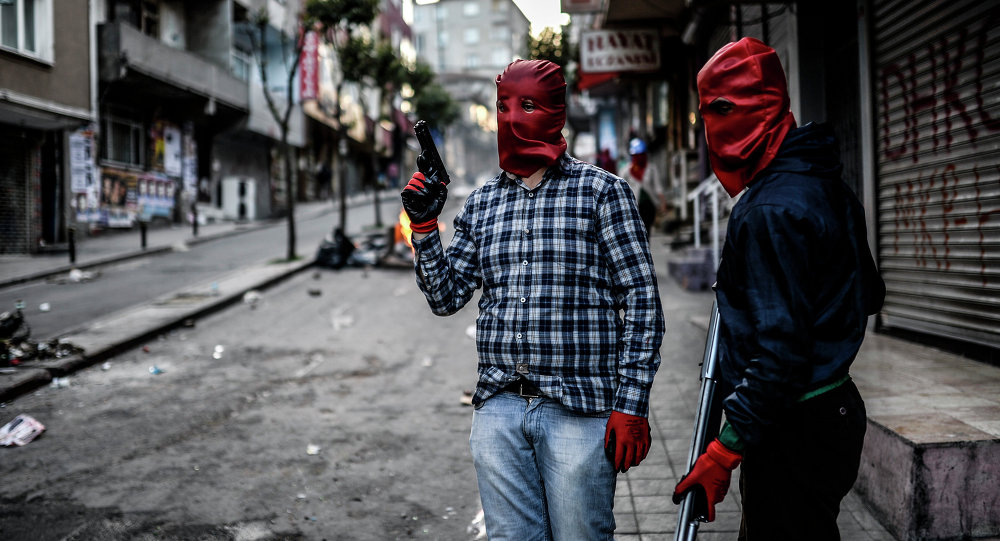
#39 Revolutionary People's Liberation Party/Front (1994)
Country: Turkey
Conflict: DHKP/C Insurgency in Turkey
Leader(s): Unknown
Strength: Unknown
Goal(s): Replace the Turkish government with a Marxist one
About: DHKP/C was originally named Dev Sol until in 1994 factional infighting caused it to be renamed. It was once the most active left-wing terrorist group in Turkey, believed to have assassinated several Turkish officials, including former prime minister Nihat Erim, and attacked Turkish security officials, US military contractors, and launched rockets at a US consulate in Istanbul. After its name change, Turkey cracked down on the group and it began to use suicide bombings and IEDs as methods. Even though its ideological leader died in 2008, the group has continued to bomb police stations, attacked the Ministry of Justice, and have taken hostages, perhaps most notably prosecutor Mehmet Kiraz. DHKP-C has killed dozens of police officers and soldiers along with more than 80 civilians since it was formed. It competes with the PKK for influence in Turkey, although it tried to ally with them in the past. Membership includes an estimated several dozen members inside Turkey, with a support network throughout Europe.

#40 Séléka (2012)
Country: Central African Republic
Conflict: Central African Republic Civil War
Leader(s): Various
Strength: ~3,000
Goal(s): The partitioning of the Central African Republic
About: Séléka is a militia group that emerged after several rebel groups during the Central African Republic civil war agreed to band together to fight the government (Séléka literally means "alliance"). Their grievances included decades of political and economic persecution and marginalization, impunity of violence, and broken promises from years of skirmishes and peace deals. By the end of 2012, it became one of the strongest and managed to make Michel Djotodia president. He announced that he would dissolve the group in 2013, but many did not accept this decision, forming the Ex-Séléka militias. These members managed to carve out their own personal fiefdoms, including setting up checkpoints, collecting illegal taxes, and taking millions from illicit trades. In 2014 they renamed themselves to the Popular Front for the Rebirth of Central African Republic, which has known to ramp up its violence that has taken an often ethnic nature. Séléka killed scores of unarmed civilians, often deliberately, and have conducted large scale attacks of looting and murder, including creating child soldiers. One of their leaders said "what happens, happens".

#41 Shining Path (1970)
Country: Peru
Conflict: Internal Conflict in Peru
Leader(s): Unknown, most recent leader was killed in 2013
Strength: ~250
Goal(s): Overthrow the government and turn Peru into a communist country
About: Shining Path is a Maoist guerrilla group that originally split from the communist party of Peru. They want to restore the "pure" ideology of Mao. The Shining Path believed that by establishing a dictatorship of the proletariat, inducing a cultural revolution, and eventually sparking a world revolution, they could arrive at full communism. It is known for its large use of brutality, attacking civilians, trade union organizers, and members of the government. Its guerrilla wing has participated in the 1992 Tarata bombing, which killed 25 people, and the 1983 Lucanamarca massacre, where they killed 69 people with axes and machetes. They used to control several areas in Peru, but the capture of their leader and a sweep of executions has led to a decline in their power. Still, various rebel members have attacked government forces, including attacking police officers and participating in drug trafficking. Peru has reported that they also try to to kidnap people and make them slaves.

#42 South Yemen Movement (2007)
Country: Yemen
Conflict: Yemeni Civil War
Leader(s): Aidarus al-Zoubaidi and Ali Salem al Beidh
Strength: Unknown
Goal(s): Independence for South Yemen
About: The Southern Movement is a separatist organization clashing with both government and Houthi forces in Yemen. They are loyal to the Southern Transitional Council, which wants to restore independence to South Yemen. The call for independence has been a source of contention for over a century, and when the group formed they demanded equality under the law and a change in relations between north and south in the context of a united Yemen. The group flourished during the Arab Spring as they pointed out corruption and mistreatment by the government. In 2015, the Southern Movement rose to prominence after entering into a loose alliance with the exiled President Hadi, and proving to be a vital force in the pushback against Houthi forces, receiving both financial and military assistance from members of the Gulf coalition as a result. The Houthi movement attacked Aden in 2019, resulting in a battle where UAE-backed South Yemen forces fought with the Saudi-backed Hadi government.

#43 Sudan People's Liberation Movement-in-Opposition (2013)
Country: South Sudan
Conflict: South Sudanese Civil War
Leader(s): Riek Machar
Strength: ~10,000, along with at least 20,000 more from allies
Goal(s): Oust Salva Kiir as president of South Sudan and replace him with Riek Machar
About: SPLM-IO split from SPLM because of tensions between leadership of the organization, with one side loyal to President Kiir and another loyal to Vice President Machar. Their military consists of deserters from South Sudan's army, as well as private armies of rebel warlords and tribal militias. They seized control of several towns throughout South Sudan and thousands have been killed and displaced. They set up a rival government in the Upper Nile, and have even rejected using South Sudan's currency and use the US dollar instead. When the 2018 peace agreements began, it protested the Parliament and argued that it would still have concentrated power in the hands of the president and mistrust would still persist. The president of South Sudan has elected to ignore the opposition group regardless of if they want a peace agreement or not, and has called on help from both Egypt and Uganda to fight them. The war has resulted in over 300,000 dead, both as a result of violent clashes and famine.

#44 Sudan Revolutionary Front (2011)
Country: Sudan
Conflict: War in Darfur and the Third Sudanese Civil War
Leader(s): El Hadi Idris
Strength: 60,000
Goal(s): Overthrow President Omar al-Bashir and create what they consider to be a more equitable Sudan: "New Sudan"
About: SRF is an alliance of various rebel groups that were against the government of President Omar al-Bashir. It wants to restructure the Sudanese state was allegedly supported by South Sudan. The formation of the SRF had, at least on paper, brought together the greatest internal military threats to President Bashir. If the alliance held, overcoming the divisions between rebel forces that had been a feature of almost every Sudanese rebellion, it would present a serious challenge to Bashir’s regime. However, political disagreements within the group, mainly over leadership, has resulted in several conflicts, especially in Darfur where three million people have been displaced. Hundreds of thousands of people have died as a result of al-Bashir's genocide and war crimes, although the SRF isn't exactly innocent, having killed civilians through attacking civil infrastructure. In 2019, Bashir was ousted in a coup and the constitutional agreement has attempted to initiate a peace process and ceasefire, which is showing some success so far thanks to humanitarian assistance.

#45 Syrian Democratic Forces (2015) and the Kurdistan Workers' Party (1978)
Country: Syria, Turkey, Iraq, and Iran
Conflict: Syrian Civil War and the Turkey-PKK Conflict
Leader(s): Nechirvan Barzani, Mazloum Abdi, Cemîl Bayik, and Siamand Moini
Strength: 100,000+
Goal(s): Create an independent nation state consisting of some or all of the areas with a Kurdish majority, although others campaign for just greater autonomy within the existing national boundaries
About: Kurdistan is a region in the Middle East that spans from Turkey to Iran. It consists of several nationalist organizations that want greater autonomy for the Kurds. Iraqi Kurdistan is considered to be the only fully autonomous entity, although they fought a conflict with Iraq in 2017 over territorial control, where the Kurds lost 20% of their territory. SDF is the armed wing of Rojava, which established de facto autonomy during the Syrian Civil War, but this was mainly because Syria didn't want to fight them too. Currently, they focus primarily on ISIS, and is most known for its offensive on Raqqa, but in 2019 Turkey and their allied rebels invaded Rojava to establish a "safe zone". They did this because Turkey believes the PKK (Kurdistan Workers' Party), who also want to establish a Kurdish state, is a major terrorist organization that threatens their government. There was a ceasefire in 2015 with the PKK, but relations broke down and Turkey wants to eliminate all PKK fighters. Both the PKK and SDF generally lost in the offensive, losing a large portion of their territory and increased fears that Syria is going to re-incorporate Rojava. They were once considered the only true allies with the US during the Syrian Civil War, but the US abandoned them. There is another Kurd group in Iran, the PJAK, but they stopped fighting in 2012.

#46 Syrian National Army (2017) and the Free Syrian Army (2012)
Country: Syria
Conflict: Syrian Civil War
Leader(s): Decentralized, but Anas al-Abdah is the leader of the National Army's government
Strength: ~30,000 for the Free Syrian Army, 80,000 for the National Army
Goal(s): Remove Bashar al-Assad from power
About: The Syrian opposition is a very, very loosely organized political structure that consists of groups that want to overthrow of the Assad government. The main military wing is the Free Syrian Army. This group encourages defections and carries out guerrilla-style tactics in the countryside and cities. It doesn't want to hold territory, rather it wants to thin out government forces and demoralize them to destabilize the center of government. Saying the army is split is an understatement. While multiple groups fly its banner, they also have their own objectives that has frequently led into conflicts with each other. The organization's disorganization has led to becoming mostly decentralized and without leadership. Turkey has taken advantage of the situation, creating their own "opposition": the Syrian National Army. This group is at the whim of Turkey, paid for by the Turkish government, and are used to carry out their goals, such as in Turkey's attack against the SDF. The opposition's failure has led to the government and terrorist organizations to maintain the most control in the country. The Syrian Civil War has resulted in over 100,000 dead and more than seven million people displaced.

#47 Taliban (2002 in its present-day form, but they formed in 1994)
Country: Afghanistan
Conflict: War in Afghanistan
Leader(s): Hibatullah Akhundzada
Strength: ~150,000
Goal(s): Reform the Islamic Emirate of Afghanistan
About: In 1996, Mohammed Omar and his group of veterans from the Soviet-Afghan War, mainly from the Pashtun area, managed to take control of Afghanistan. They formed a brutal totalitarian government, enforcing their interpretation of Islamic law, until in 2001 the US invaded because they refused to give up Osama bin Laden. After the US killed Osama in 2011, the US began to withdraw, leaving about 9,000 of the original 100,000 in the country. 18 years after the fall of the Taliban government, according to the Global Terrorism Index, the Taliban are the strongest terrorist organization in the world, having a presence in over 60% of the country and accounting for 83% of all terrorism-related deaths in 2018. It's believed the Taliban managed to regain their power thanks to acquiring the government's military weapons through various raids, effective use of IEDs, failure of both the government and foreign forces to protect citizens, gaining support by fighting ISIS, switching to mainly targeting security forces, and they managed to counter US strategies. The peace process has become a difficult one because the Taliban feel they have the upper hand, with the most recent ceasefire not only being temporary, but it's not known when it's supposed to begin.
The Haqqani Network is part of the Taliban, and is considered one of the most lethal and sophisticated branches of the Taliban, targeting Coalition members using IEDs, suicide attacks, and bomb-laden vehicles. It is responsible for some of the highest-profile attacks of the Afghan War, including the June 2011 assault on the Kabul Intercontinental Hotel and a 2011 day-long assault on a US embassy and ISAF headquarters in Kabul.

#48 United Liberation Front of Assam (1979)
Country: India
Conflict: Insurgency in Northeast India
Leader(s): Paresh Baruah and Arabinda Rajkhowa
Strength: ~4,000
Goal(s): Establishment of an independent Assam
About: ULFA is an insurgent group that began as a secessionist ethnic socialist organization that employs terrorist actions. They conduct kidnappings, murders, and extortion, which resulted in a very negative public opinion. The ULFA is reported to maintain a number of camps in Bangladesh, where members are trained and sheltered away from Indian security forces. In 2011, there was a major crackdown on the ULFA, which greatly assisted the government of India in bringing ULFA leaders to talks. After peace talks, the group became divided between various military wings that either signed a peace agreement or rejected it. Those that are still in the group are part of the United National Liberation Front of Western South East Asia, which conducts guerrilla tactics and all generally either want regional autonomy or demand complete independence. Both sides have been accused of human rights violations, with both sides engaging in retaliatory attacks against civilians.

#49 Zapatista Army of National Liberation (1994)
Country: Mexico
Conflict: Chiapas Conflict
Leader(s): Apparently the Rebel Zapatista Autonomous Municipalities doesn't have a head
Strength: 3,000
Goal(s): Greater political and cultural autonomy for the indigenous people of Mexico and indigenous control over local resources, especially land
About: EZLN is an anti-neoliberal rebel organization that formed to protest Mexico's economic policies that they thought would negatively affect Mexico's natives, but then advocated for disenfranchised natives. EZLN started the war by taking over 4 towns of Chiapas, holding the towns for several days as they fought with Mexican troops. Mexico armed paramilitary units that battled the Zapatistas and their supporters, frequently attacking civilians as retribution for their support of the rebels. Negotiations between the government and Zapatistas led to agreements being signed, but were often not complied with in the following years as the peace process stagnated. This resulted in an increasing division between communities with ties to the government and communities that sympathized with the Zapatistas. Today, the group controls a significant amount of territory in Chiapas and, while skirmishes still occur, it has focused more on peaceful mobilizations and expansion.
#50 Cat tax
Feel free to check out some other "history/politics" lists:
Secret Police Groups: https://imgur.com/gallery/wjb1TxH
US Color-Coded War Plans: https://imgur.com/gallery/onLKjXY
Micronations: https://imgur.com/gallery/LohcoBP
Governments-in-Exile: https://imgur.com/gallery/oeB9dBU
Methods of Execution: https://imgur.com/gallery/dcJT9gY
Unsolved Serial Killer Cases: https://imgur.com/gallery/b9aZHnz
Forms of Government:
https://imgur.com/gallery/4KnanQ8
Mass Suicides: https://imgur.com/gallery/TwjP5nB
Military Operations that Never Happened: https://imgur.com/gallery/D5JaDkZ
Genocides: https://imgur.com/gallery/xCHGIbh
Shortest-Lived Countries: https://imgur.com/gallery/AUplb
US 3rd Parties: https://imgur.com/gallery/G5qM0
Iconic Historical Photographs: https://imgur.com/gallery/QDuRA
Dalael
The REAL difference between terrorist and rebels is what the US decided they are. If the US backs them, they're rebels.
joebuck123
Excellent post. I learned a lot, I didn't even know a number of these groups existed. Thanks and keep up the good work.
BananaEatingCat
Wow looks like a lot of these groups are sick of their government
BZHCH
Very interesting list, @op.
Idrinkforevil
You forgot the KKK which is a domestic terrorist group.
NinjaCongo
"China does not always distinguish between legitimate political dissent and the advocacy of violence to overthrow the government" 1
removekarling
US doesn't often distinguish between those things when it comes to foreign policy either.
NinjaCongo
A slight understatement... 2
Invyggle
Thats just a quote from the US state department on the matter, not his own phrasing.
NS83
Number 7, of baby that back blast. Oath keepers tho? They never have really carried anything out tho. They just train.
Cryolith
Been more than a few OKs arrested for threats, weapons, and bomb-making.
azhellboy
Oath keepers are not Terrorist. mostly ex solders who think their oath to the constitution overrides any order given to harm or deny rights
CryingDuringFinals
#12 My man in the back just holding a pipe.
valinnut
The FARC was not founded in 2016. Several farc party members left the peace agreement in that year but mostly this year. They exist since 64
Malloon
Interesting (well, sort of) fact: Most victims of Islamic Terrorist attacks are other Muslims.
wadatahmydamie
In another thread, somebody says it’s only due to proximity.
EndlessTrash
This could also be used for the annual "Radical Insurgent Fashion Mailorder Catalog". Camos, bandanas and banners for your revolution.
notaninvestigator
Hell, a savvy supplier of those more mundane items could make a killing.....heheh
goforthandconquer
they already do
camn333
Also, name generator for insurgent armies: just pick something with "liberation" and/or "democratic" in it, and add "people's" for a bonus.
DorianBlack
Al Qaeda wasn't founded by Osama. "The Base" was rhe codename the CIA gave to the muslim team helping funnel supplies in Afghan war. [1/2]
DorianBlack
Al Qaeda means "the base" Osama and a few other western educated wealthy muslims were brokers n on the ground tacticians for fighters
nosuchthingascreativity
well Osama was part of it since the beginning since al qaeda was still called the mujahedin https://imgur.com/wtIyN6l
DorianBlack
"The Mujahedin" is a generic word not a formal group. Its just plural of a jihadist fighter. Aka a muslim fighting non muslims.
DorianBlack
Yes Osama was part aligned with the jihadists in Afghanistan. America relied on him and others as central brokers for supplies. (1/2)
DorianBlack
The name given to the large network of brokers which included Saudis, Pakistanis, Egyptians and others was A/Q bc they were the base of ops
buttbuttpartywagon
#7 man, part of me Hope's they shot all those seconds later.
NZSheeps
Especially the one's pointing straight up....
themagicalliopleurodon
Can I just assume this is available in calendar format?
Wesugi
Just imagine a calender with a member of a terrorist group posing sexily while in full gear & balaclava each month.
Sauroctonus
*Nothing but a balaclava.
firlefranz
FailedCrate
Despite what some NATO suck ups to Erdogan will tell ya, the YPG is not a terrorist or rebell organization, they're part of Rojava / ...
FailedCrate
..Kurdistan. Which is a mostly autonomous region in Syria/Iraq. The Kurds deserve their own nation. Fuck Erdogan.
seerofsorrow
Amen. I feel like they've been held as a minority for long enough.
Drath101
I can almost guarantee you the various IRA groups have more than 300 members
SexPiss
I always thought it was the real IRA and the provisional IRA that were the main factions too?
superbadonkey
Up the ra!
MyRespectableAlterEgo
They're tricky because it's not just fighters - there are lots of civilians who sympathise and pass information. Only kinda members I guess?
Drath101
I wouldn't count them, they're not members so much as sympathisers, they're not 'active'
MyRespectableAlterEgo
yeah also the same can be said for most of these organisations - there's always a civilian component
MyRespectableAlterEgo
though the same can probably be said about a lot of these organisations
thatsnotaknife
Great write up until you threw in the Oath Keepers alongside Al Qaeda.
EADGBEtuned
Some of the info here is an absolute bullshit.
tworle00
Oath Keepers?
thatsnotaknife
But it Antifa apparently
scatman454
Antifa should be in this group
arewenotkingsandqueenstogether
Antifa isn't an organization, isn't armed, and isn't violent. It's literally just anyone opposed to fascism .
TheJomsborgViking
What about the peoples front of Judea?
Gra55hopper
Fuck off, we're the Judean Peoples Front!
BrosephStalin2501
Fuck off! We're the Judean people's front!
berlinson
You mean the People's Front of Judea
DrStrange365
No, we are the Judean Peoples Front
Cthulhukitten
I hate those
Superfloofthundercat
Splitters
nateitbe
I thought we were the popular front
justbecauseimparanoiddoesntmeanyourenotouttogetme
No, there he is, over there.
Scambone
Splitter!
NZSheeps
*Judean People's Front
JackAxton
We're the People's Front of Judea! You mean the Judean People's Front!
NinjaCongo
Splitter!
DustyLightning
I never realized there were so many...
Axtt
They are some more. So sad.
Agent00Negative
Hans Gruber would never approve of this list... no Asian Dawn?!? I mean come on man!!
MostLikelyNotWearingPants
I read about them in Time magazine.
ILikeFugu
Of course, the terminology of "terrorist" all too often depends on who is winning, and whose point of view it is. 1/X
Invyggle
Haftar is winning and is on the list
goforthandconquer
"One man's terrorist is another man's freedom fighter".No doubt that ANY official government is guilty of worse. In other words: being human
ILikeFugu
It's important to remember that the Rebel Alliance were the good guys, and that epithets need to be nuanced
SidneyHarbor
IMO it should also heavily depend on if they're killing people. Calling a political group terrorists when they don't kill people isn't right
moose17152
Every army in the world kills innocent people by this definition they are all terrorist . I agree with you btw
ILikeFugu
Terrorism doesn't require loss of life
SidneyHarbor
By my definition it does. If they're not killing, then it's a political action group, like ANTIFA or whatever.
ILikeFugu
Your definition needs a serious rethinking. They're TERRORists, not KILLPEOPLEists.
Splinthar
So people who soley burn crosses and beat people up are political action groups. But once they kill someone they are terrorists?
SidneyHarbor
As you said, that's a hate organization and they may engage in vile hate crimes, but that doesn't make them terrorists.
o4kill
Spreading terror could include less than lethal violent crimes like burglary, rape, kidnapping, and extortion
OriginalSim
If they have Free or Democratic in their name they won't be
MassStorageDeviceCanNowBeSafelyRemoved
or if they have people's in the name, it's not for or by the people
goforthandconquer
so...usa?
Corrodias
(psst... that stands for "[The] United States of America"; neither of those words is present in that name)
goforthandconquer
(psst..: v
v
Corrodias
Anything you say that doesn't go over well was only a joke. Ha! It was such a clever one, too. You should get a TV show.
goforthandconquer
i thought it went over well... well over your head.
SkeletorXD
So is armed protest and resisting government action considered terrorism?
Invyggle
Yes. The word has lost any meaning it might have carried.
Hutchy01
Only the French could have wine terrorists
Applepotamus
i can't wait to hon hon at my French friend about this
LordPantsFancy
Wait until you hear about our cheese terrorists.
DerBoopMeister
I know some cheese which could be use as biological weapons.
Hezaethox
"So what is your group about? Religion, Freedom, Ideology?" "Nah, we just REALLY like French Wine"
DerBoopMeister
The irony is that those french vinemakers probably got European financial support. France got the 2nd highest EU support (281M € in 2017)
Uhxohr
France is by far a net contributor, they would have had government financial support without the EU too.
FeFra
The only wine terrorist out there are those who drink wine that came in cardboard packaging
PersonalityFire
No, this is *fine*: https://imgur.com/WNzVAAd
GuyF1eri
It’s not 1995, you might want to revisit the boxed wine section :p
BugEyedLemur
Yea but you can't slap the bag when the bag is actually a bottle. Slapping the bottle is just not the same as slapping the bag.
wadatahmydamie
It’s not just Franzia any more. TheFutureIsNowOldMan.gif
Cheeseme
Botabox for the win(e)
BrazilianThunderPanda
KONY 2012
wadatahmydamie
I was surprised the LRA didn’t make the list, they’re the largest Christian terror organization on earth
Kunkoh
Not a Christian organization.
wadatahmydamie
Except the part where they self-identify one and explicitly state that they want a government based on the Ten Commandments.
Swarmbrawl
#27
wadatahmydamie
Jesus, I was looking for the initialism and missed it
Isklar07
They are. Re-read the list :)
wadatahmydamie
Already addressed, re-read the replies to my comment
DeckhandAdmiral
You put in the Oathkeepers? A bunch of retired fat dudes who go shoot at the range and discuss the first and second amendment? But you pass
Ustrello
So wearing masks open carrying military style weapons and threatening protesters isnt terrorism, fuck right off
LoudBirb
Yeah, Army of God (anti-abortion terrorists/arsonists) would've been a better example.
DeckhandAdmiral
on Antifa and like organizations? Odd.
peppermintgal
Antifa fights terrorists.
EggFooYung
Antifa isn't really an armed group as such, at least not yet. Whereas the Oafkeepers and the Atomwaffles are. Even they are more like gangs.
removekarling
Antifa isn't an organisation lol; if you've ever been in a counter protest against anyone far-right, you're as much antifa as anyone else.
IllBeDamnedifIGotoHell
Fascists: *kill a bunch of people* Antifa: we’d better organize counterprotests against these Nazis Media: ANTIFA ARE TERRORISTS
IllBeDamnedifIGotoHell
Antifa is not an organized group, usually not armed, and has a death toll of 0. I agree that there were better USA candidates, though.
IllBeDamnedifIGotoHell
For instance, the Order, the KKK at various points in the last 160 years, and the border militias.
Hybris51129
Well this is Imgur so any US based group being pro 2nd amendment is likely going to be seen as a bigger threat.
circegirl
Yeah coz ruby ridge, Waco, Timothy McVeigh.... they were all benign af..... smh.... you American gun wackos omg
peppermintgal
Antifa is pro 2nd amendment. As Marx said, any attempt to disarm the workers must be frustrated.
IllBeDamnedifIGotoHell
While you’re accurate in many cases (a lot of left-wing activists are pro-gun ownership), assigning any political views to antifa that are
IllBeDamnedifIGotoHell
More than “we hate fascists and need to confront them in the streets when they gather” is misleading. That’s their one thing in common.